
A private-label freeze-dried fruit project is not simply a standard product placed in a printed pouch. The brand, product developer, factory, packaging converter, laboratory, and logistics team must agree on one commercial definition of the finished item. That definition includes the fruit, cut, sensory profile, broken-piece allowance, net weight, package barrier, label copy, case configuration, release documents, and destination-market requirements.
The fastest projects begin with a complete brief. Huaping Jingnan's freeze-dried fruit range provides practical starting points for format discussions, while its private-label and custom packaging support covers supplied requirements, optional sample development, production, quality assurance, and delivery documentation.
Stage One: Translate The Brand Idea Into A Product Brief

"Strawberry snack" is not a production brief. The factory needs to know whether the brand wants whole berries, slices, dices, or mixed irregular pieces; whether the product will be eaten directly or blended with another ingredient; and whether visible seeds, color variation, or small fragments are acceptable. A retail snack prioritizes recognizable pieces and eating quality. A cereal inclusion may prioritize size distribution, fines control, and resistance to transport breakage.
- Target fruit, variety or origin requirement, and acceptable seasonal alternatives.
- Piece geometry, nominal size, size tolerance, and maximum fines or broken rate.
- Sensory target for color, aroma, sweetness, acidity, crunch, and defects.
- Ingredient statement, claim restrictions, allergen review, and destination market.
- Retail net weight, pouch dimensions, case count, pallet pattern, and forecast.
Stage Two: Approve The Product Before Designing Around It
A representative sample should be tested in the real sales format, not judged only from a laboratory bag. Measure piece count per serving, fill volume, dust migration, pouch appearance, and eating quality. Run a drop or distribution simulation because low-density porous fruit can fracture after repeated case movement. If the product is a mix, check segregation: pieces with different size and bulk density can separate during filling and transport.
The approved sample must be connected to a written specification. Useful controls include moisture, water activity, size distribution, broken pieces, fines, color range, foreign-material expectations, microbiological limits, and the test methods used. Freeze-drying removes water but is not automatically a microbial kill step, so raw-material controls and agreed microbiological release criteria remain important.
Stage Three: Engineer The Pack As Part Of The Product
Freeze-dried fruit is hygroscopic. Once exposed to humid air it can lose crispness, gain weight, cake, and become more vulnerable to quality change. Packaging therefore needs a defined water-vapor barrier, reliable seals, and a packing process that limits open exposure. A pretty pouch with inadequate barrier performance is not a finished solution.
Stage Four: Lock The Commercial Specification
The purchase order should reference the approved specification revision and packaging artwork revision. It should also define quantity tolerance, coding format, release documents, inspection rights, Incoterm, and the event that starts lead time. Any remaining open point can become a production hold.
Huaping Jingnan describes fruit processing experience, QC laboratories, food-grade workshops, and packaging zones. For a private-label project, these capabilities are most useful when the buyer converts them into a project control plan: incoming fruit criteria, in-process checks, retained samples, finished-product testing, and signed disposition. Buyers can review the broader processing and quality-control setup before agreeing the exact checks for their SKU.
Stage Five: Validate The First Commercial Run
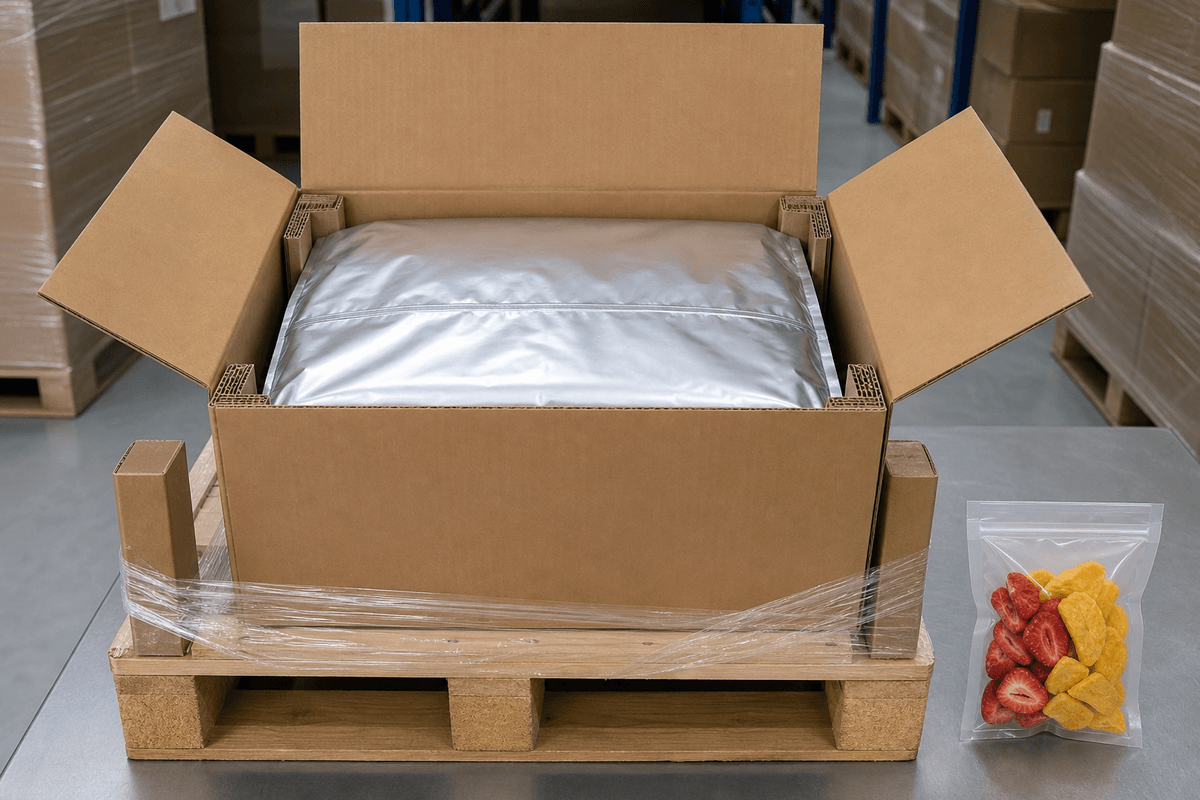
The first run should be treated as a scale-up, even when the sample was successful. Compare the commercial lot with the approved reference for size, color, aroma, texture, bulk density, and fines. Check net-weight control and seal integrity across the run, not only at startup. Photograph the packed product and retain finished units from the beginning, middle, and end of packing.
Release documentation may include the product specification, certificate of analysis, ingredient statement, allergen statement, traceability information, and other documents agreed for the market. Certification or claim documents should be requested for the exact product and current lot rather than assumed from general supplier language.
Build Repeatability Into The Second Order
After launch, record complaints, breakage observations, actual fill performance, and sell-through. A structured post-run review can refine the acceptable color range, sieve distribution, case configuration, or pouch dimensions. The goal is not to make every natural fruit piece identical; it is to define variation that the consumer experience and production line can tolerate.
Put formal change notification into the supply agreement. A change in fruit origin, variety, cut method, pretreatment, dryer cycle, screening practice, packaging structure, or test method can alter the approved product even when the item name remains the same. Define which changes require advance notice, documents only, a fresh sample, an application test, or full reapproval. The brand should apply the same discipline to its own artwork, forecast, serving size, and package changes.
A private-label program becomes scalable when the brand brief, approved sample, specification, artwork, test methods, and change-control process all point to the same product. Brands preparing a new SKU can use Huaping Jingnan's custom-order inquiry channel to submit the fruit format, package concept, forecast, market, and target launch date together.