
Custom freeze-dried fruit packaging options should be selected from the product inward. Freeze-dried fruit has a porous structure, low bulk density, high moisture sensitivity, and variable piece geometry. Those properties affect barrier choice, headspace, seal contamination, case size, pallet efficiency, and the amount of breakage that reaches the customer.
The right package is therefore not automatically the smallest pouch or the highest-barrier laminate. It is the system that protects the approved product through filling, storage, distribution, and use while meeting the brand's cost, appearance, and disposal priorities.
Begin With Product Risk, Not Pouch Shape
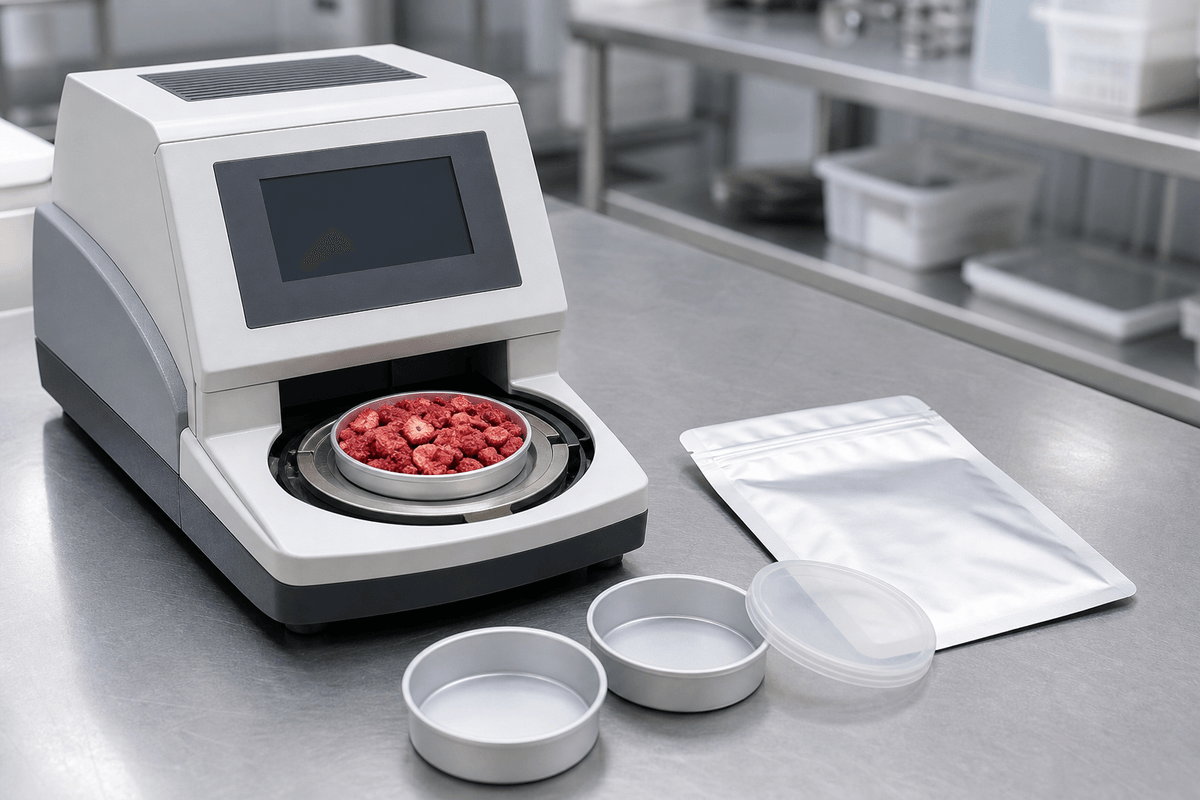
Whole strawberries and large slices need more headspace and gentler handling than powder. Small dices can enter the seal area. Fine powders may dust during filling and require attention to static, flowability, and seal cleaning. Fruit mixes may settle by bulk density, so a package that looks uniform at filling can appear segregated after transport.
Huaping Jingnan presents a broad freeze-dried ingredient portfolio, including berries, tropical fruits, citrus, vegetables, mushrooms, and coffee. Each format needs its own pack trial; a pouch proven for apple slices should not be approved automatically for hygroscopic passion-fruit powder or fragile raspberry pieces.
Specify Barrier With Measurable Inputs
Ask the packaging supplier for water-vapor and oxygen transmission data under stated test conditions. Compare those values with the intended shelf-life study, climate, distribution route, and product sensitivity. Metallic or foil-containing structures can provide strong barrier performance but limit product visibility and may affect recyclability. Transparent high-barrier structures support product display but must be validated against light exposure and moisture ingress.
A package trial should measure product water activity or moisture at filling and after storage checkpoints. Texture, caking, color, aroma, and seal condition should be recorded at the same time. Package claims should come from the tested fruit-pack combination, not only from a film data sheet.
Protect Pieces From Filling And Freight
Fragile pieces can break at hopper transfers, augers, weighers, pouch drops, case packing, and pallet transport. Track fines before the filler, after the filler, and after a distribution simulation to locate the damage. Adjust drop height, contact surfaces, fill speed, package headspace, and secondary packaging before tightening an incoming fruit specification that production itself cannot maintain.
- Run a filled-pouch drop test and case vibration or transport simulation.
- Inspect seal areas for powder or small pieces that can create channels.
- Check zipper reclosure after the consumer has removed several servings.
- Measure net weight and fill height across normal bulk-density variation.
- Review carton compression and pallet overhang for the planned route.
Artwork And Coding Need Production Space
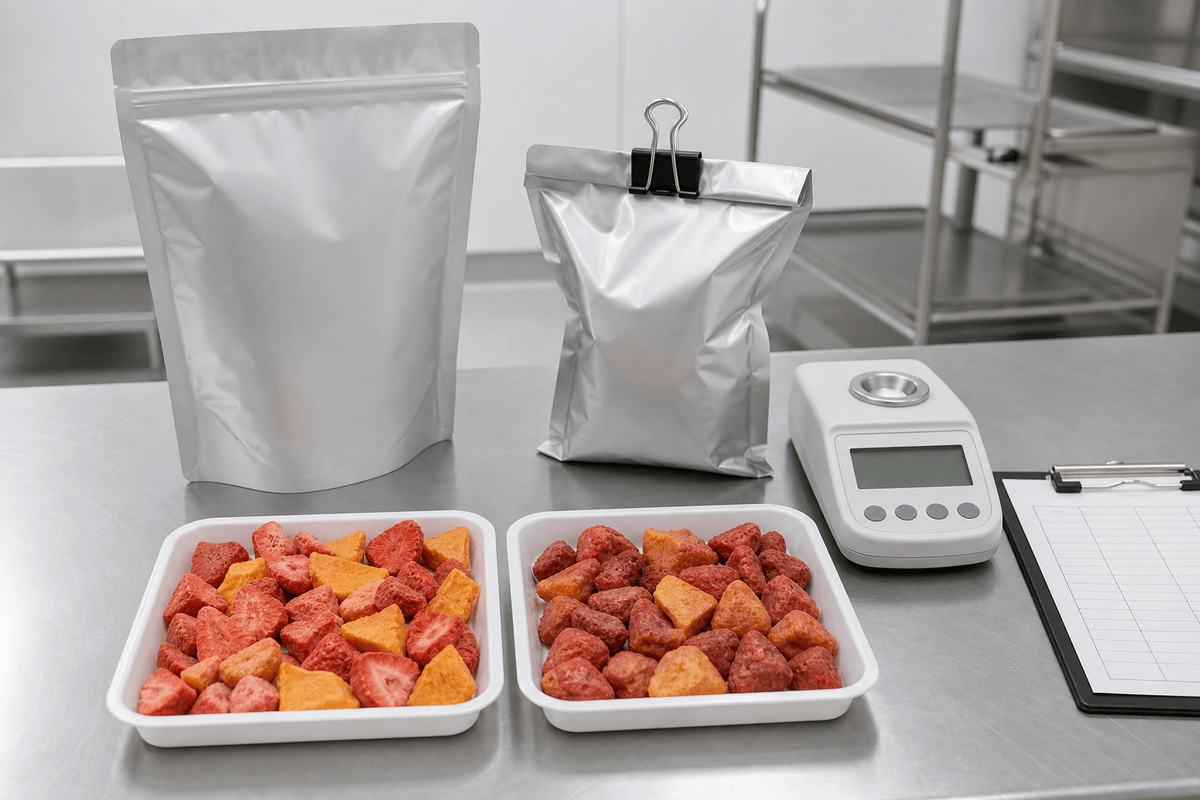
Reserve a clear zone for lot code, production date, or other required variable data. Confirm print contrast, code adhesion, and scanner readability on the actual film. The brand owner remains responsible for destination-market label review, including the product name, ingredient declaration, allergen information, net quantity, responsible business details, and any claims.
Huaping Jingnan lists retail pouches, printed bags, bulk export packaging, and private-label branding among its custom packaging options. A productive inquiry includes target net weight, fruit format, expected annual volume, destination, preferred material, artwork status, and required case configuration. These details allow the packaging discussion to focus on a buildable pack rather than a visual concept alone.
Approve A Packaging Specification, Not Just A Mockup
The final specification should identify material structure or agreed performance, dimensions and tolerances, zipper and tear-notch position, seal width, print revision, coding location, pack count, case strength, liner details where relevant, and inspection criteria. Keep approved empty packaging and filled reference units. Change control is essential because a film substitution or dimension change can alter seal settings, barrier, fill weight presentation, and case fit.
For resealable packs, simulate consumer use rather than testing only an unopened pouch. Open and close the zipper repeatedly, remove a normal serving each time, and expose the package to the expected room conditions. Monitor product texture and package function through the planned consumption period. For bulk liners, perform an equivalent factory-use trial covering carton opening, partial dispensing, temporary reclosure, and transfer into the manufacturer's controlled storage.
Document the packing-room conditions used for approval. Relative humidity, product temperature, time between dryer unloading and sealing, and pouch seal settings can influence the starting condition inside the pack. If a converter changes the laminate or the factory changes the filling line, repeat the checks that could be affected instead of relying on the original package trial.
For bulk or retail packaging development, buyers can send Huaping Jingnan a product photo, target fill weight, route, and performance brief through the packaging project contact. The strongest result is a tested system that keeps the fruit dry, recognizable, and commercially presentable when it reaches the user.