
Bulk freeze-dried fruit packaging for ocean freight has two jobs: preserve a very dry, porous food and protect a fragile physical structure through weeks of handling and climate change. The product liner controls direct moisture and oxygen exposure. The carton, pallet, wrapping, dunnage, and container loading system protect that liner and the fruit from puncture, crushing, vibration, and movement.
A thick carton cannot compensate for a poor vapor barrier, and a high-barrier liner cannot survive if sharp pieces, staples, pallet edges, or collapsed cartons puncture it. Buyers should specify and test the complete pack system.
Start At The Product-Liner Interface
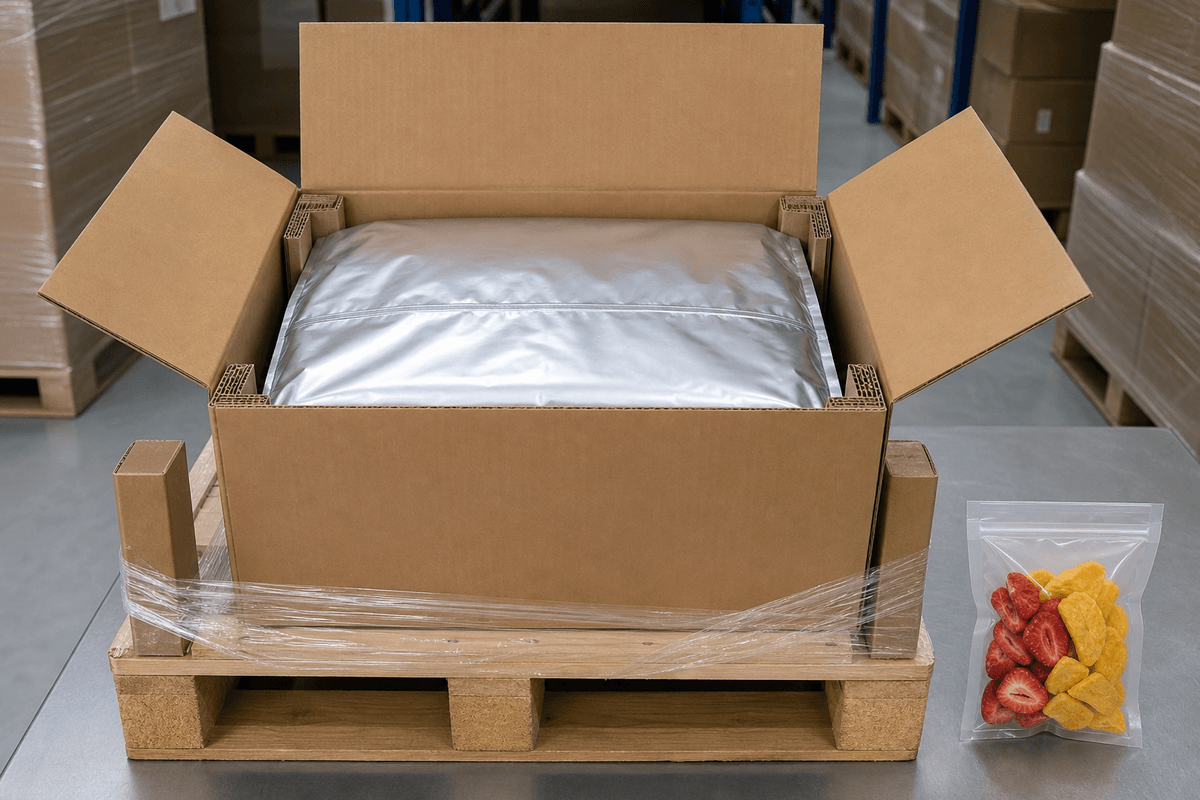
Freeze-dried fruit readily absorbs humidity. Use a food-contact liner with water-vapor and oxygen barrier appropriate to the fruit, shelf life, route, and climate. The material description should identify the structure or verified performance, not merely say "plastic bag" or "foil bag." Confirm seal method, seal width, closure integrity, and allowable product contamination in the seal area.
Sharp fruit edges and excessive headspace can increase abrasion during vibration. Overfilling can strain seals and crush pieces. Underfilling can allow movement and repeated impacts. Establish a net weight and liner size that supports a compact but uncompressed fill, then conduct vibration and drop trials on the packed carton.
Engineer The Carton For Compression And Fragility
Ocean freight stacks cartons for an extended period while humidity can reduce corrugated strength. Specify board grade and compression performance for the stacking height, pallet pattern, journey, and warehouse conditions. Avoid carton overhang and align vertical edges so loads transfer predictably.
Fruit format changes the pack requirement. Broad strawberry slices and delicate raspberry pieces need more protection from crushing than dense small dices. Banana, apple, mango, and pineapple pieces may have different edge hardness and bulk density. Huaping Jingnan's visible range of slices, berries, and chunks gives buyers a practical reason to validate pack weight separately by format rather than using one carton load for every SKU.
Control Container Condensation At Source
Closed freight containers can experience temperature changes that produce condensation on cargo or internal surfaces. Moisture sources include cargo, wooden pallets, dunnage, packaging, humid air introduced during loading, and water ingress. Inspect the empty container for holes, damaged seals, odor, contamination, and a wet floor. Use dry, compliant pallets and dunnage, and load under controlled weather where possible.
Container desiccants can be one element of a validated plan, but their capacity and placement must suit the route and moisture load. They do not repair a leaking roof or protect fruit after the product liner is punctured. Do not allow desiccant units to contact food liners or create a contamination hazard.
Keep Cargo Stable Without Crushing It
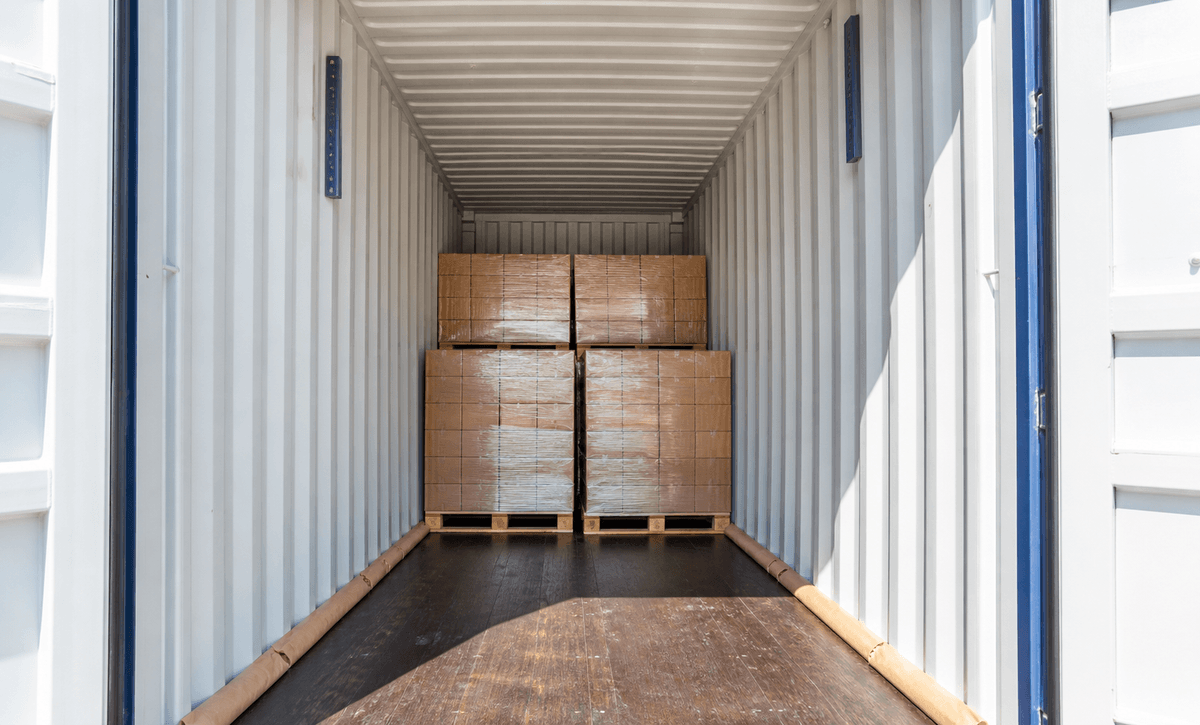
Use a pallet pattern and restraint system that prevents lateral movement while avoiding excessive strap or stretch-wrap pressure. Protect corners. Fill voids with appropriate dry dunnage or use an engineered load plan. Do not combine freeze-dried fruit with odor-emitting, wet, hazardous, or incompatible cargo.
Record carton count, pallet count, gross and net weight, lot placement, seal number, container condition, and loading photographs. Lot mapping helps the buyer investigate localized damage and select representative receiving samples.
Test The Distribution Pack Before Scale-Up
- Seal test: Confirm repeatable full-width liner seals without fruit dust or wrinkles.
- Vibration test: Measure fines, piece breakage, liner abrasion, and carton movement.
- Compression test: Evaluate the packed carton and pallet under realistic stacking and humidity.
- Drop and handling test: Inspect corners, inner liner, seals, and fruit condition.
- Climate trial: Compare moisture, water activity, texture, and packaging after warm-humid exposure.
Specify Receiving Inspection
At destination, examine the container before unloading. Note water marks, condensation, odor, shifted pallets, damaged cartons, and seal condition. Sample cartons from different locations, not only the doorway. Inspect liner vacuum or tightness where relevant, seal integrity, fruit crispness, color, odor, fines, moisture, water activity, and agreed microbiology.
Allow cold or cool sealed packs to equilibrate before opening in humid air. Opening immediately can introduce condensation and obscure whether damage occurred during transit or receiving.
Use Custom Packaging To Match The Route
Huaping Jingnan describes bulk export packaging and custom packaging support. A useful ocean-freight inquiry should state fruit and format, net weight per liner, carton dimensions, pallet preference, stacking height, route, transit duration, destination climate, receiving equipment, and required tests. The final structure and performance values should be confirmed in the approved packaging specification.
Conclusion
Ocean-freight protection for freeze-dried fruit requires several coordinated barriers. The liner protects the food, the carton protects the liner and pieces, the pallet controls handling, and the container plan manages movement and environmental exposure. Validate the full pack under vibration, compression, handling, and climate conditions, then verify it again at receiving.