
A seasonal sourcing plan for freeze-dried berries should begin before harvest and extend beyond the next shipment. Freeze-drying creates a shelf-stable ingredient, but it does not remove agricultural variability. Variety, growing region, weather, maturity, disease pressure, picking method, cold-chain time, and fresh-fruit price can change color, flavor, size, residue profile, yield, and available volume.
The plan should connect the crop calendar to the finished-product forecast. It needs decision dates for specification approval, field or supplier review, residue strategy, fresh-fruit allocation, freeze-drying capacity, lot approval, inventory build, and replenishment. A calendar copied from another country is not sufficient; exact harvest windows must be confirmed for the approved origin and variety each season.
Translate Demand Into Fresh-Fruit Need
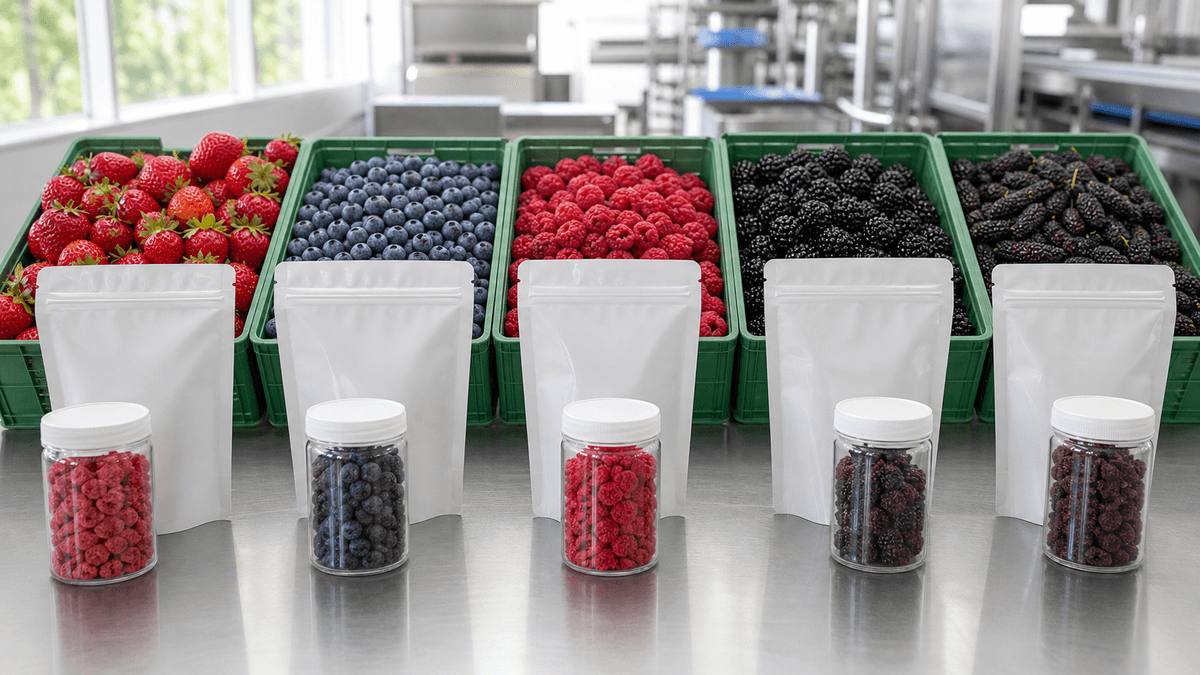
Start with monthly finished-product consumption, expected growth, promotional peaks, and safety stock. Convert the required freeze-dried kilograms into an estimated fresh-fruit requirement using the supplier's historical yield for that berry and format. Do not use one yield for strawberry slices, raspberry pieces, blueberry wholes, and powder; water content, trimming, screening, and breakage differ.
Add assumptions for rejected raw fruit, off-size finished pieces, fines, laboratory holds, and production loss. Record the yield as a range. A plan based on the best historical yield can become underfunded or understocked after a difficult crop.
Approve A Range Without Losing Product Identity
Natural berries vary. A specification that demands one exact shade, size, and flavor intensity may reject safe, usable seasonal material; an overly broad specification may produce obvious consumer inconsistency. Define acceptable ranges for color, maturity, acidity, sweetness, piece size, broken rate, and sensory profile, supported by retained samples from representative lots.
For visible inclusions, create a blend standard if multiple lots will be combined. For powder, monitor color, carrier status, mesh, and fruit-solids contribution. Any blending must preserve traceability and comply with the buyer's lot and origin requirements.
Build Residue Testing Around The Crop

Pesticide risk is connected to origin, crop, season, weather, and target market. Agree the maximum residue limit framework, analyte scope, sampling point, laboratory, and action for a failed result before harvest. A general certificate is not a substitute for a market-specific review.
Microbiology, foreign material, and environmental controls also matter because low-water-activity food can carry surviving organisms even when growth is limited. The annual plan should include supplier controls and lot release, not only a purchase reservation.
Use Huaping Jingnan's Berry Range As Distinct Programs
Huaping Jingnan lists strawberry, blueberry, raspberry, blackberry, and mulberry products. These should not be managed as one interchangeable berry supply. Strawberry slices depend on size and breakage; blueberry wholes depend on berry caliber and skin behavior; raspberries and blackberries can generate delicate pieces and fines; mulberries bring a different shape, color, and flavor profile.
The company's factory description includes freeze-drying lines, QC laboratories, food-grade workshops, and packaging zones. Buyers can use its sample and packaging support to discuss harvest-linked samples, retained lots, bulk liners, and release schedules. The exact origin, variety, crop window, and reserved volume still need written confirmation for each program.
Set Inventory Rules Before The Season Ends
- Base stock: Cover normal demand through the period when new-crop material is not yet approved.
- Risk stock: Reflect crop variability, testing delays, production capacity, and international freight.
- Lot rotation: Use shelf-life and first-expiry logic while preserving approved sensory continuity.
- Reorder trigger: Include production and shipping time, not only warehouse consumption.
- Exception plan: Preapprove alternate size, origin, or berry only if the finished product can tolerate it.
Validate Alternate Origins Before A Shortage
A second origin can reduce weather and harvest concentration risk, but it is not a drop-in replacement merely because the fruit name matches. Compare variety, berry caliber, skin-to-pulp ratio, color, acidity, aroma, pesticide program, microbiology, freeze-drying yield, and finished-piece strength. Run the alternate lot through the customer's actual cereal, chocolate, bakery, beverage, or topping application before granting approval.
Document which differences are acceptable and which require a label, artwork, nutrition, or specification review. If origin is declared on pack or linked to a marketing claim, commercial flexibility may be narrower than technical interchangeability. Keep approved alternate samples and define who can authorize a switch; emergency substitution without this groundwork can solve a supply shortage while creating a quality or compliance problem.
Review The Plan Every Month
Update demand, crop news, approved inventory, consumption, quality holds, and shipment status. Track forecast accuracy and actual yield. A seasonal contract without monthly reconciliation can leave one party holding excess stock while the other faces a shortage.
Conclusion
A strong seasonal berry plan converts sales demand into fresh-fruit needs, reserves realistic capacity, defines pre-harvest quality and residue controls, approves representative lots, and carries enough verified stock into the off-season. Treat each berry as its own agricultural and manufacturing program, then review the plan throughout the year.