
Natural color ingredients for beverages must survive a demanding environment. A color that looks right in water can fade, shift, precipitate, form a neck ring, or interact with protein once it enters a commercial formula. Heat treatment, oxygen, light, minerals, sweeteners, acids, preservatives, package material, and storage temperature can all change the result.
A beverage team should screen color sources with a staged stability plan. The goal is to eliminate unsuitable candidates early, then invest shelf-life time in the few materials that meet both visual and sensory requirements.
Classify The Beverage Before Selecting Color
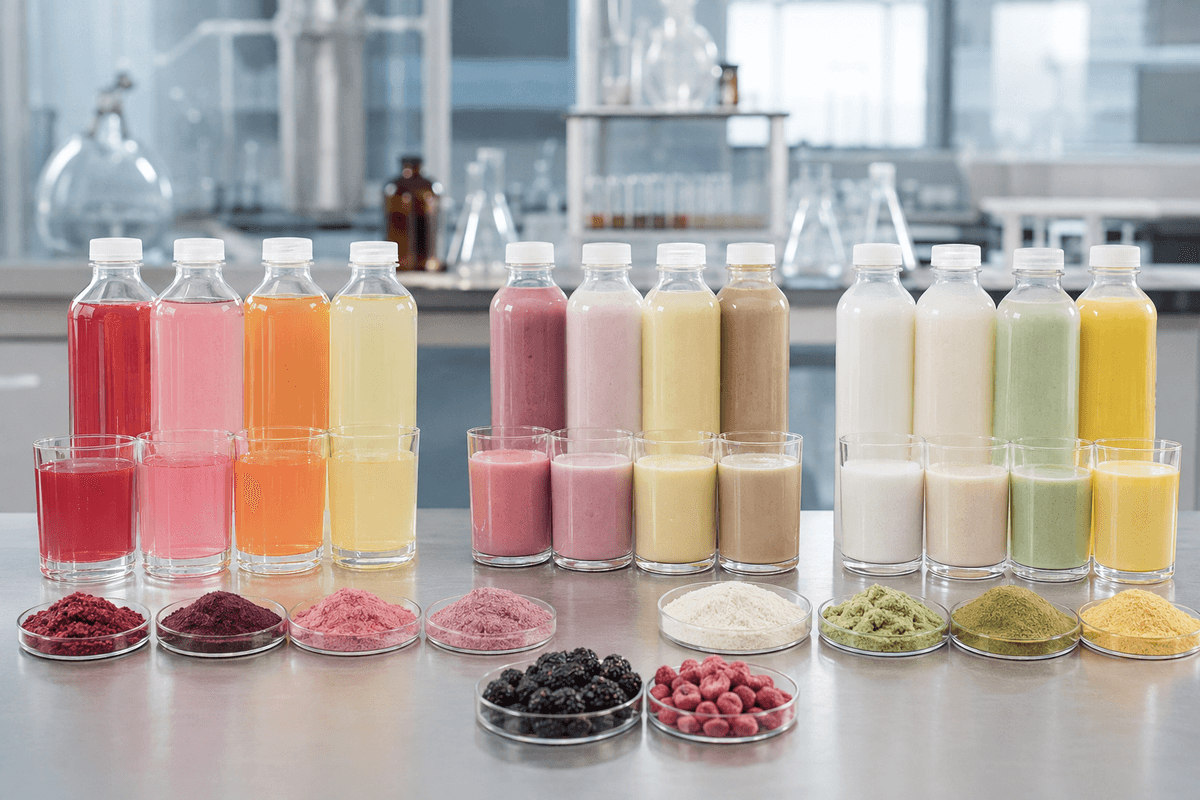
Begin with the beverage matrix: clear acid drink, juice-style beverage, carbonated drink, tea, dairy-style product, plant-based beverage, protein drink, syrup, or dry mix. Record target pH, soluble solids, protein, fat, minerals, process temperature, homogenization, fill method, package, and expected storage.
Fruit powders can contribute authentic fruit character and suspended solids, but they are not direct substitutes for every color preparation. A clear drink may not tolerate visible particles. A smoothie-style beverage may welcome them. A high-protein base may respond strongly to fruit acidity. Define the intended appearance before asking a supplier for a sample.
Screen Fruit Families Against The Target Hue
Berry ingredients are logical candidates for red, pink, and purple directions. Tropical and citrus fruits can support yellow or orange tones. Huaping Jingnan presents strawberry, raspberry, blackberry, blueberry, and mulberry formats, plus a fruit range covering mango, pineapple, citrus, passion fruit, and dragon fruit. These pages help buyers identify candidate fruit families; exact powder composition and suitability for beverage use require testing and confirmation.
Stage One: Rapid Bench Screening
Prepare each candidate at several doses in the real base. Use a fixed mixing procedure and record dispersion time, initial color, flavor, pH change, foam, sediment, and ring formation. Include an uncolored control and the current commercial standard if one exists.
Reject a candidate early if it requires an impractical dose, creates unacceptable flavor, destabilizes protein, or leaves excessive sediment. This prevents attractive initial color from hiding a poor formulation fit.
Stage Two: Process Challenge
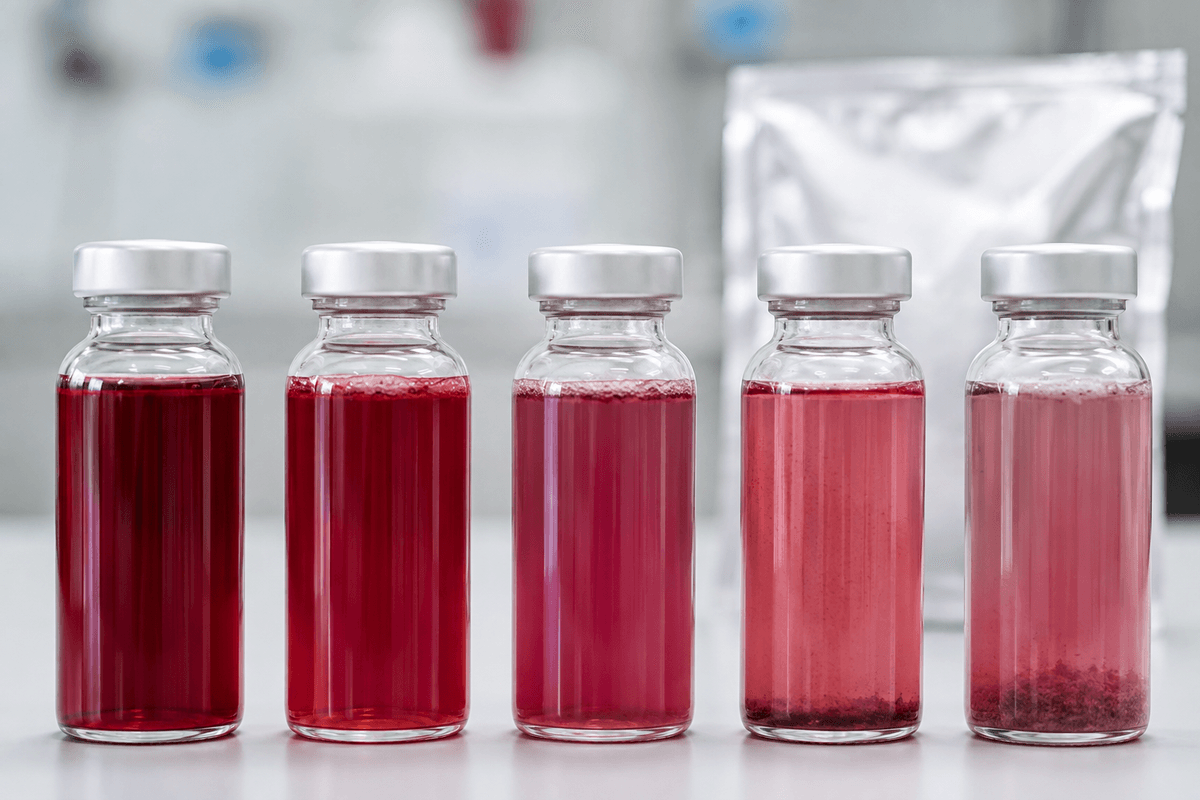
Run the normal thermal process, homogenization, carbonation, and fill sequence at bench or pilot scale. Sample before processing, immediately after processing, and after equilibration. A powder may disperse under laboratory stirring but form clumps in the production order of addition. Heat can also change pigment, aroma, and background browning.
Stage Three: Light, Oxygen, And Temperature
Fill the intended package and at least one diagnostic comparison package. For example, compare clear and light-protective containers or normal and elevated oxygen exposure. Store samples at the intended condition and a justified accelerated condition. Accelerated testing can rank candidates, but it should not automatically replace real-time shelf-life work.
Measure color using a defined instrument geometry or a consistent visual cabinet. Also record pH, sediment, turbidity, aroma, and package appearance. Color change can be unacceptable even when a single pigment measurement looks stable, and physical separation can make a beverage look faded.
Watch Protein, Minerals, And Ascorbic Acid
Protein beverages need special attention because fruit acids can move the system toward protein instability. Calcium, iron, and other minerals may influence color or create interactions. Ascorbic acid is valuable in many beverage formulas but can be part of a complex pigment-stability picture. Test the complete fortification system rather than a simplified colored-water model.
Use a controlled order of addition. Pre-dispersing powder may reduce clumps, while prolonged high-shear mixing can increase oxygen incorporation. Record the exact method used for the approved sample so plant trials can reproduce it.
Set Release Criteria For Ingredient And Beverage
The ingredient specification should address composition, carrier status, mesh, moisture, water activity, bulk density, color range, flavor, microbiological limits, foreign-material controls, and packaging. The beverage specification should define initial color, acceptable change, sediment, pH, sensory limits, and package condition.
- Use an application standard in addition to loose-powder color.
- Test more than one ingredient production lot.
- Retain both ingredient and finished-beverage samples.
- Document process, package, and formula changes that trigger retesting.
- Review labeling and permitted use separately for every target market.
Organize A Supplier Trial Around Beverage Reality
Huaping Jingnan's custom sample and packaging workflow can support discussion of fruit source, milling, sample quantity, bulk pack, and documentation. The buyer should provide the beverage type, formula constraints, target hue, pH, thermal process, package, shelf-life plan, and desired ingredient declaration.
Ask for representative lots rather than selecting from a single attractive image. Confirm whether the powder is pure fruit or carrier-assisted and whether the proposed lot is appropriate for the destination market. Application evidence, not a dry powder photograph, should decide commercial approval.
Conclusion
Natural color ingredients for beverages need a test plan that connects pigment source to the finished package. Rapid screening, process challenge, and packaged stability testing reveal different failure modes. When color, flavor, physical stability, regulatory fit, and ingredient handling are reviewed together, the beverage team can choose a natural-color system with a realistic path to scale.