
A certificate of analysis, or COA, can look reassuring because it contains numbers and a pass statement. But a COA only helps a buyer when it can be tied to the actual lot, the agreed specification, the stated method, and the intended product use. A report with the wrong lot reference, a missing method, or a result that cannot be compared with the buyer's acceptance criteria is not a reliable release decision.
For freeze dried fruit, the most useful way to read a COA is to move from identity to physical condition, then to food-safety and documentation checks. This order prevents a team from spending time on individual numbers while missing a basic mismatch between the sample, the pack, and the commercial lot.
First Confirm That The COA Belongs To The Lot
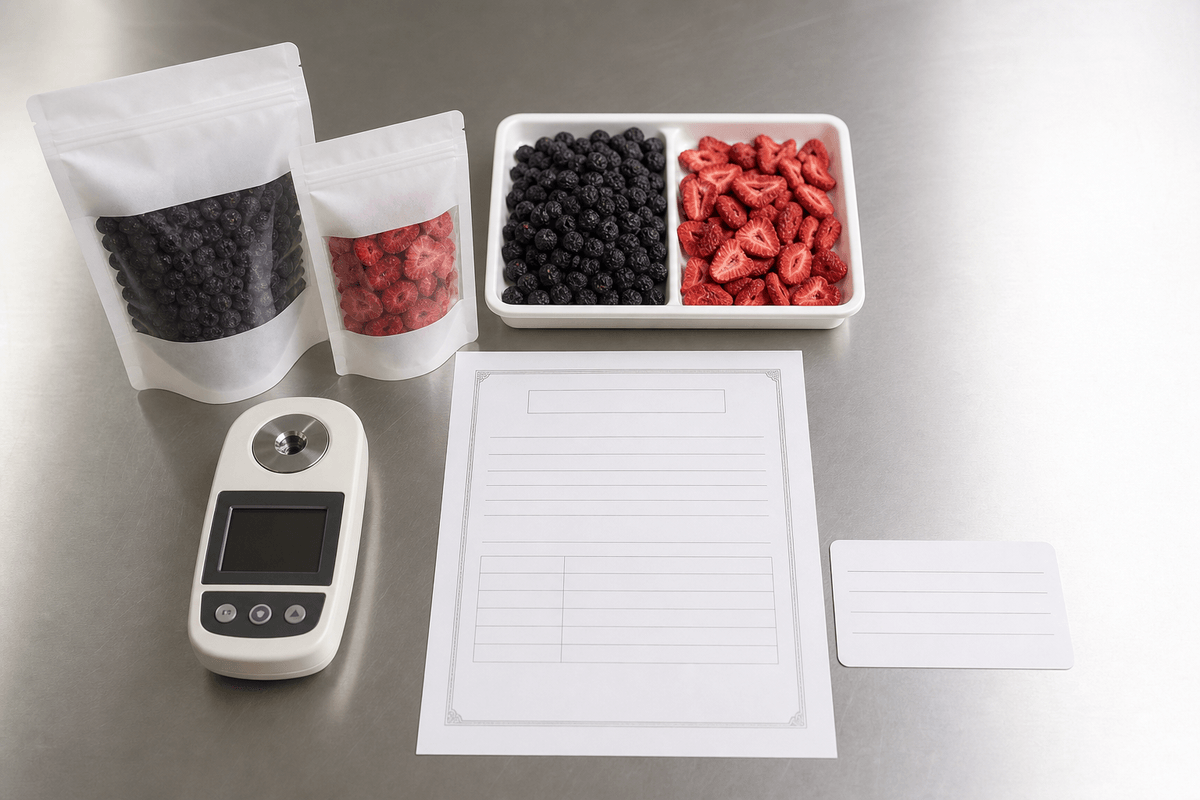
Match the product name, supplier lot code, production or packing date where used, best-before or retest information where applicable, net weight, and pack description against the shipping documents and the physical label. The buyer should also confirm that the product format on the COA matches the order: diced strawberry is not interchangeable with strawberry powder, and a berry blend is not interchangeable with a single-fruit ingredient.
Keep the incoming sample, COA, purchase order, and receiving record together. If a production problem appears later, those links allow the buyer to trace from the finished food back to the ingredient lot. This is especially important for visible toppings and inclusions, where a color or particle change can be noticed after the product is already in market.
Understand What A Water Result Does And Does Not Say
A moisture result does not automatically tell a buyer how a porous fruit inclusion will behave in a pack. Water activity is related to the available water in a product at equilibrium, and FDA notes that both temperature and equilibration can affect the reading. For a fruit powder, the buyer may compare the COA with caking and flowability after storage. For a topping, the buyer may compare it with crispness and breakage after opening and blending. The result is meaningful only when it matches a defined application test.
If the COA reports a value outside the expected range, do not make an immediate assumption about root cause. Check the method, units, sample preparation, calibration record where available, pack condition, and whether the result was taken before or after the product equilibrated. A retest should follow the agreed procedure, not an improvised comparison.
Microbiology Needs A Release Plan, Not A Generic Line Item
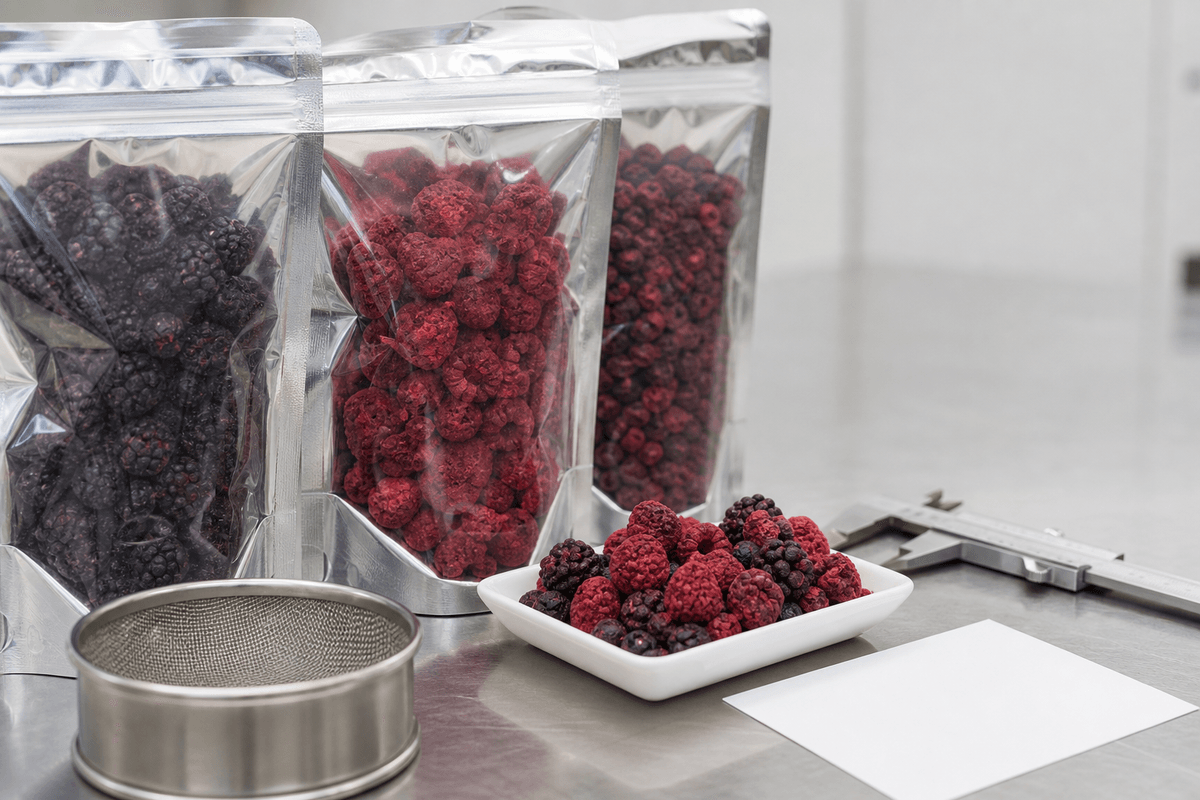
COAs often list items such as total plate count, yeast and mold, coliforms, E. coli, or Salmonella. The buyer should confirm which ones are required for the food and market, whether the stated method is acceptable, and what action is taken if a result is outside the specification. FDA's Bacteriological Analytical Manual provides laboratory procedures for food microbiological analysis, including chapters for aerobic plate count, E. coli and coliform bacteria, and Salmonella. It is a method reference, not a universal commercial limit table for every freeze-dried fruit.
Sampling is part of the result. A clean COA on one retained portion does not replace a defined sampling plan for a bulk lot. The receiving team should also inspect pack integrity and keep a sample under controlled conditions. The goal is to make the report, material, and release decision traceable to each other.
Use The COA With The Actual Ingredient Function
Huaping Jingnan's freeze-dried berry products are relevant to food applications where visual color and piece integrity can be as important as analytical values. A buyer developing a yogurt topping should read the COA alongside a crispness and yogurt-contact test. A buyer developing cereal inclusions should review particle distribution after blending. A powder buyer should add mesh, carrier use if any, bulk density, dispersibility, and caking observations to the lot review.
For projects requiring a particular format or document set, Huaping Jingnan's sample-development and documentation-support process is most useful when the buyer provides its release checklist before the commercial run. That makes the COA one part of a controlled approval system rather than a last-minute shipping attachment.
Conclusion
Read a freeze dried fruit COA as a lot-specific decision record. Confirm identity and traceability first, compare every result with the agreed method and limit, then check the fruit in its real application. The strongest buyer process combines the COA with pack inspection, retained samples, and a product-specific acceptance test.