
A freeze dried fruit specification is an acceptance tool, not a product brochure. It tells the supplier, buyer, quality team, and production line what will be inspected on every lot and what happens when a result is outside the agreed range. Without that shared document, phrases such as "premium fruit," "low moisture," or "good color" leave too much room for different interpretations.
The strongest specification starts with the finished application. A strawberry topping for a clear yogurt cup needs a different visual and breakage standard from strawberry powder used in a bar dough. Apple dice for instant oatmeal must be tested for the intended rehydration time. A bulk fruit mix for cereal must be checked for particle segregation and fines after handling. The fields below give B2B buyers a practical checklist for turning those needs into an inspectable agreement.
Start With Identity And Intended Use
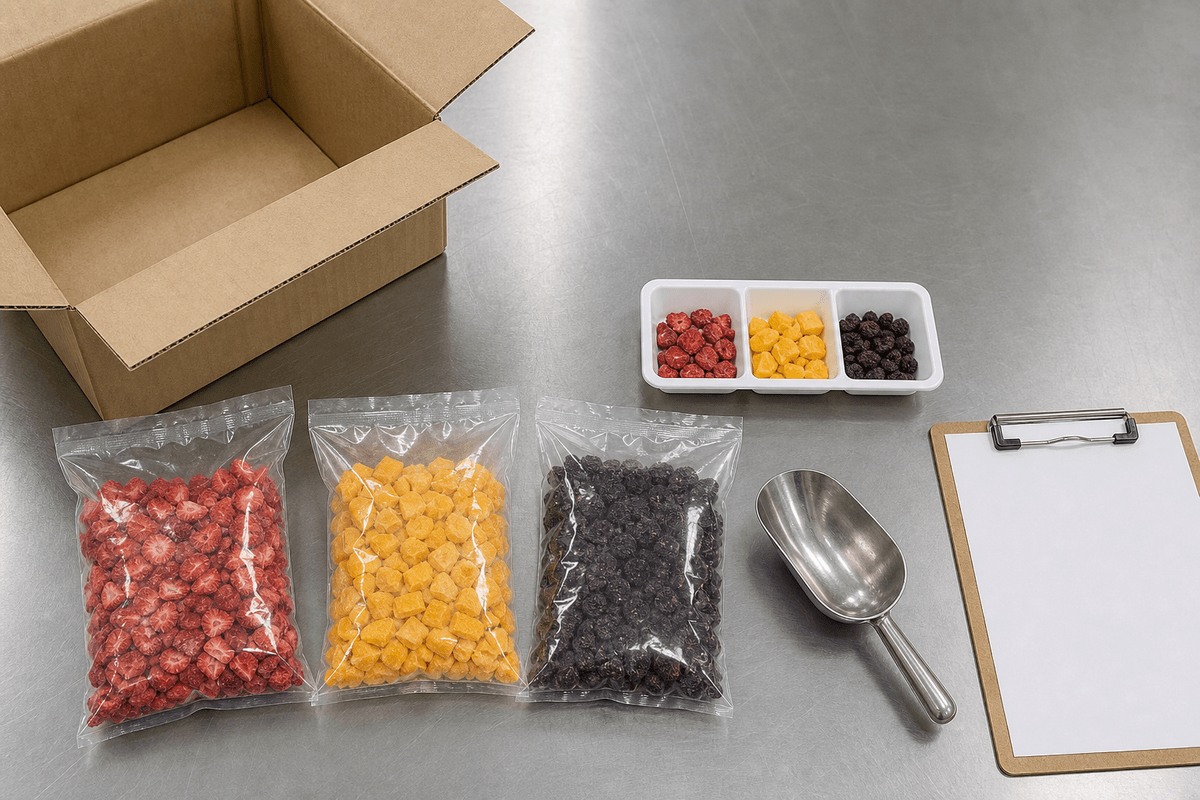
Identify the exact fruit, processing format, and application before discussing test limits. Include the botanical or common product name where needed, ingredient statement, whether a powder contains a carrier, and the intended use as a topping, inclusion, beverage powder, bakery ingredient, snack, or foodservice item. If a blend is involved, identify each component and the expected ratio or control method.
Huaping Jingnan's freeze-dried fruit range includes products such as mango, apple, banana, kiwi, pineapple, dragon fruit, and citrus items, while its berry range provides a separate starting point for strawberry, blueberry, raspberry, blackberry, and mulberry discussions. Availability and the precise format should still be confirmed for the order. The product name alone is not enough to define what reaches a food factory.
Do Not Treat Moisture And Water Activity As Interchangeable
Total moisture and water activity answer different questions. A moisture result describes how much water is present, while water activity describes available water in equilibrium with the surroundings. FDA notes that water activity affects food stability and that temperature and sample equilibration influence the reading. For a dry, porous fruit ingredient, the buyer should specify both the relevant limit and the measurement protocol when the application is sensitive to crispness, caking, or moisture pickup.
For example, a topping buyer may require the fruit to remain crisp after a defined pack-storage period. A powder buyer may be more concerned with caking, bulk density, flowability, and dispersibility. Neither buyer should borrow an arbitrary value from another product. The test plan needs to fit the fruit, its format, the formula, and the barrier properties of the pack.
Quality And Food-Safety Fields Need Context
The specification can include microbiological acceptance criteria, foreign-material controls, metal-detection requirements, allergen statement, pesticide-residue or heavy-metal testing where required, traceability, and document requirements. Values should be agreed for the exact market and use, rather than copied from a generic online table. A product intended to be eaten without a further kill step may need a different risk review from fruit that will be baked into a validated process.
Also identify whether the supplier will provide a COA, product specification, ingredient statement, nutrition information, certificate of origin, lot traceability, and any buyer-required certificates. The document list should be completed before commercial production, not requested for the first time when the cargo is ready to ship.
Make The Written Specification Match The Sample
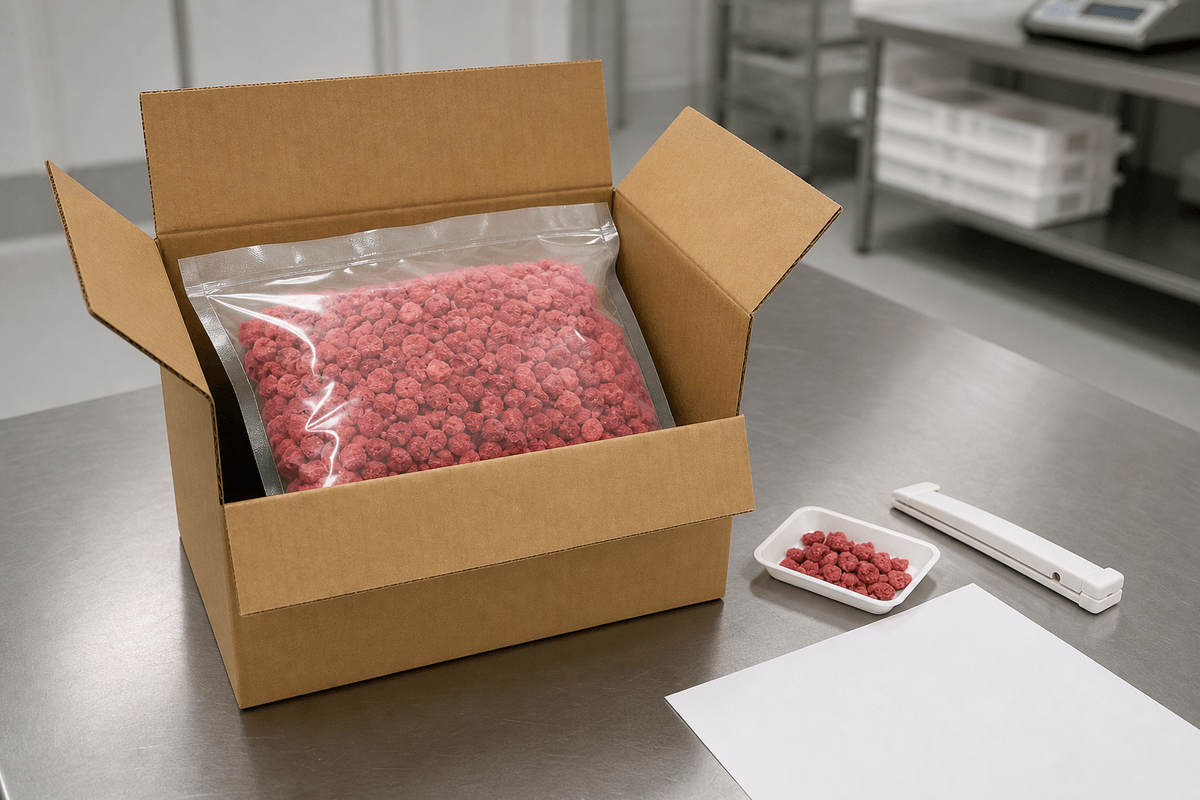
A retained sample is one of the simplest protections in a fruit project. Keep the approved supplier sample, the buyer's receiving sample, and where possible a finished-product sample from the application trial. Record lot number, pack condition, sample date, storage condition, and the exact test method. When a later lot looks different, these records let both sides discuss a specific comparison instead of relying on memory.
When a customer needs a non-standard fruit cut, blend, bulk pack, or private-label format, Huaping Jingnan's sorting, freeze-drying, packaging, and sample-development workflow provides a place to align the product brief with the acceptance checklist. The buyer should bring the actual application, target format, and inspection points into that conversation.
Conclusion
A usable freeze dried fruit specification makes quality observable. Define the product identity, physical profile, moisture behavior, appearance, safety documentation, pack, and release process in one controlled document. Then test the fruit in the food it is meant to become. That is more reliable than approving a sample on appearance alone.