
To prevent freeze dried fruit from absorbing moisture, control the product from dryer exit through final use. The risk does not begin only after a consumer opens a pouch. Fruit can soften during cooling, screening, temporary holding, packing, export handling, warehouse storage, or production-line exposure. Every unprotected minute matters because the porous structure that supports fast rehydration can also take up moisture from humid air.
The solution is a chain of controls: confirm the product has reached its approved end point, cool it without condensation, limit exposure, use an appropriate moisture barrier, verify the seal, protect the outer pack, and define handling after opening. A desiccant or thicker pouch cannot compensate for an uncontrolled process earlier in the chain.
Find The First Point Of Exposure
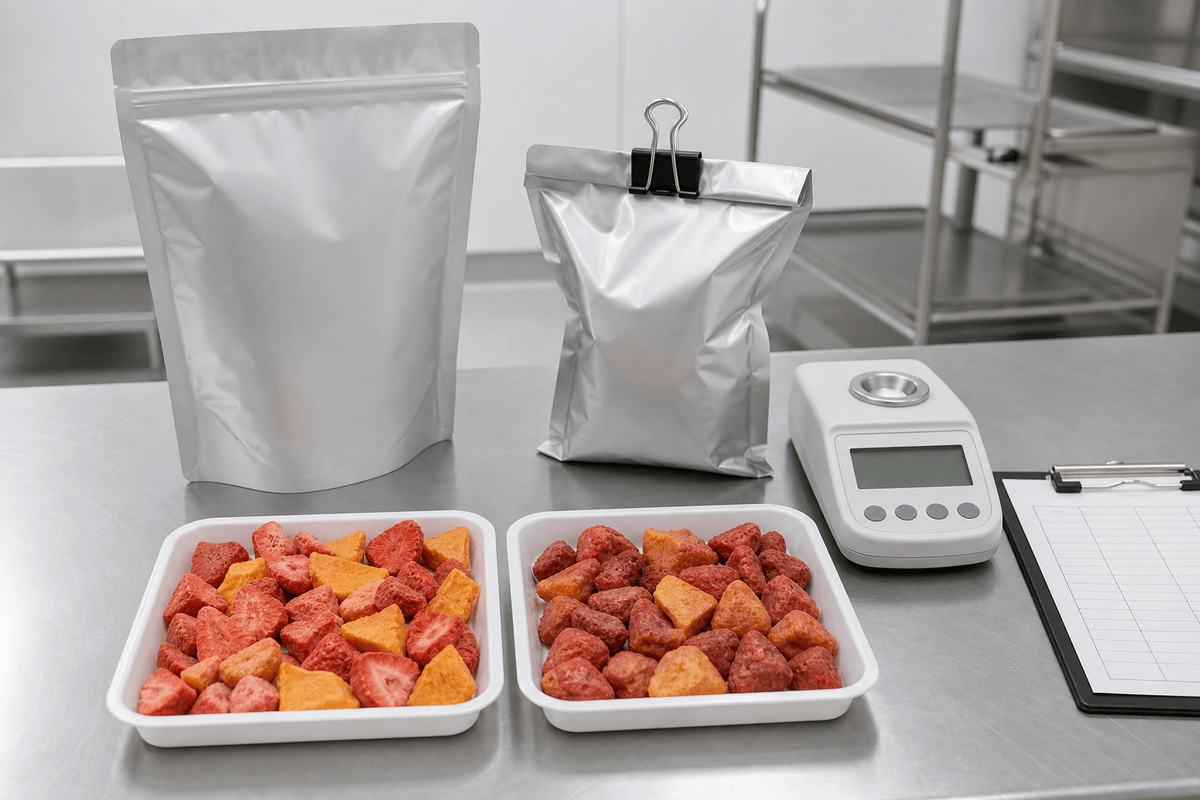
Begin at the end of freeze-drying. Ask where trays are unloaded, how the product cools, how long it waits before screening or packing, and what humidity conditions apply. Warm product entering a different environment can create condensation risk. Product held in open bins can absorb moisture before the final liner is sealed, even when the finished pack later appears intact.
Map each transfer: dryer to cooling area, cooling to screen, screen to inspection, inspection to filler, and filler to sealer. Record maximum exposure time and actual room conditions during a trial. This identifies whether softness comes from the fruit, the environment, or the packaging step.
Use Water Activity As A Trend Tool
FDA explains that water activity represents available water at equilibrium and is influenced by temperature. A single reading at dispatch cannot prove that a pack will protect fruit throughout storage. Measure at defined points, such as after packing, after accelerated or real-time storage, after transport simulation, and after the expected open-pack exposure.
Track the number with physical observations. A fruit topping may show loss of crispness, increased stickiness, color transfer, or more breakage during handling. Powder may show reduced flowability and caking. The application decides which change is commercially important.
Control Opened Packs On The Production Floor
- Choose a workable pack size: Use a quantity that can be consumed within the validated exposure window.
- Open only when needed: Stage sealed packs rather than leaving an entire shift's supply exposed.
- Reseal consistently: Define the closure method and do not rely on loosely folded liners.
- Protect the scoop: Keep handling tools dry and clean so they do not introduce moisture.
- Record room conditions: Investigate whether softening aligns with humidity excursions or long line stops.
- Inspect before reuse: Check texture, clumps, odor, visible contamination, and pack condition before returning remaining fruit to production.
Separate Moisture Pickup From Other Defects
Soft fruit is not always proof of a packaging leak. An incomplete drying end point, uneven piece thickness, excess product loading, or variation in raw-fruit maturity can create different textures within a lot. Excessive fines can also feel softer than intact pieces. Compare moisture and water activity results with size distribution, retained samples, and dryer records before assigning root cause.
For cereal, topping, or snack applications, run the same sensory and physical method every time. Define the waiting period after opening, number of bends or compression events, contact with other ingredients, and storage condition. Consistent tests make supplier and buyer observations easier to reconcile.
Use Receiving Inspection To Catch Barrier Failures Early
At receiving, inspect cartons for crushing, puncture, wetting, and unusual odor before opening the inner pack. Check liner or pouch seals, compare net condition with the shipping documents, and sample from more than one pack when the lot size requires it. Keep the sample exposure short and reseal the remaining material immediately.
If pieces are soft or powder is clumped, place the affected material on hold. Compare it with a sealed retained sample, measure moisture or water activity using the agreed method, and review storage and transport records. Photograph seal or carton damage and record where the sample came from. These observations help distinguish a shipment-wide barrier issue from isolated physical damage or an earlier drying variation.
Packaging Support For Moisture-Sensitive Fruit
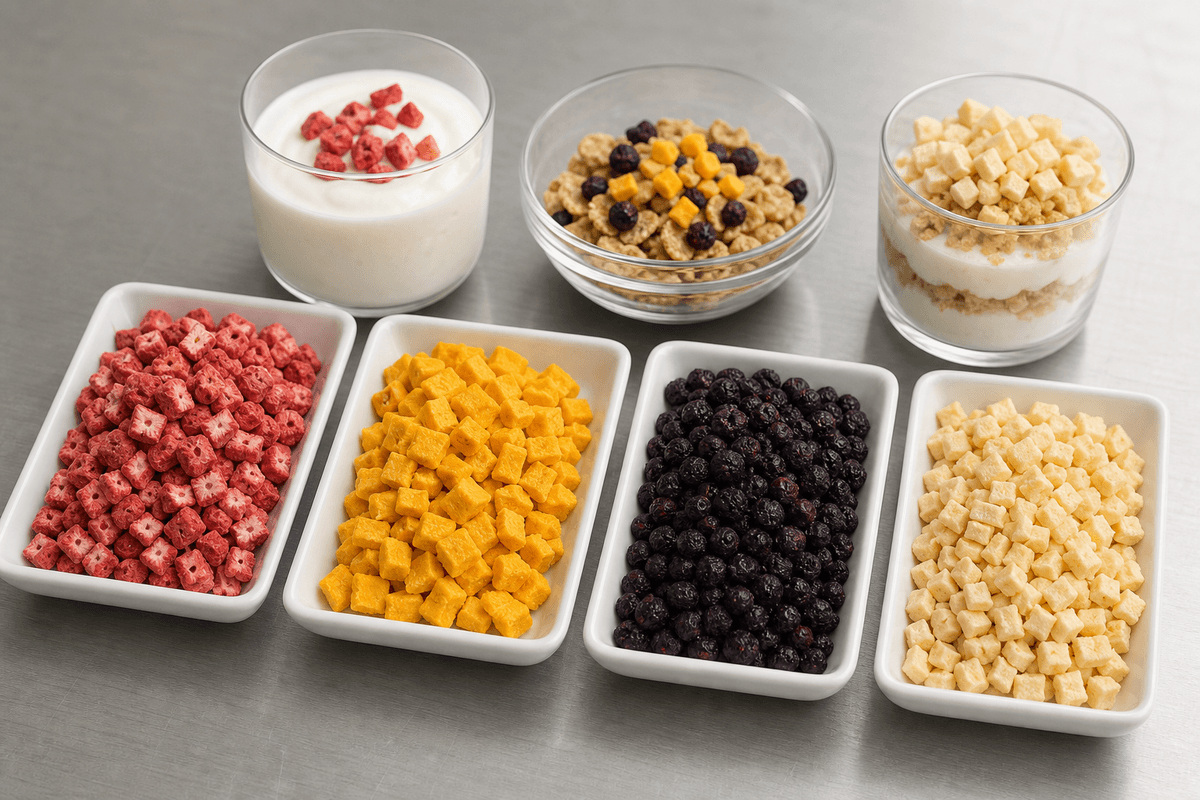
Huaping Jingnan presents freeze-dried berry pieces that buyers can assess for cereal, topping, snack, and other visible applications. Their porous texture and different piece forms make pack testing an important part of approval rather than an afterthought.
The company's bulk export, retail, and private-label packaging options allow a project to be discussed around the actual distribution route and opening pattern. Buyers should supply target pack weight, storage climate, use rate, application, and acceptance test so that the proposed pack can be validated for the order.