
Freeze-dried vs air-dried fruit for manufacturing is a choice between ingredient systems, not simply premium and economy grades. Freeze-drying generally creates a light, porous structure with limited shrinkage and strong shape recognition. Air drying uses heated airflow and commonly produces denser, chewier pieces with more shrinkage. Those differences influence cutting, conveying, mixing, hydration, package volume, and the finished eating experience.
The correct comparison begins with the application. A cereal brand may value crisp, visible pieces. A soft bar may prefer a dense fruit that does not pull moisture as aggressively from the binder. A tea blend may need recognizable slices and rapid aroma release. A bakery filling may care more about heat performance and controlled chew than fresh-like appearance.
Structure Drives Factory Behavior
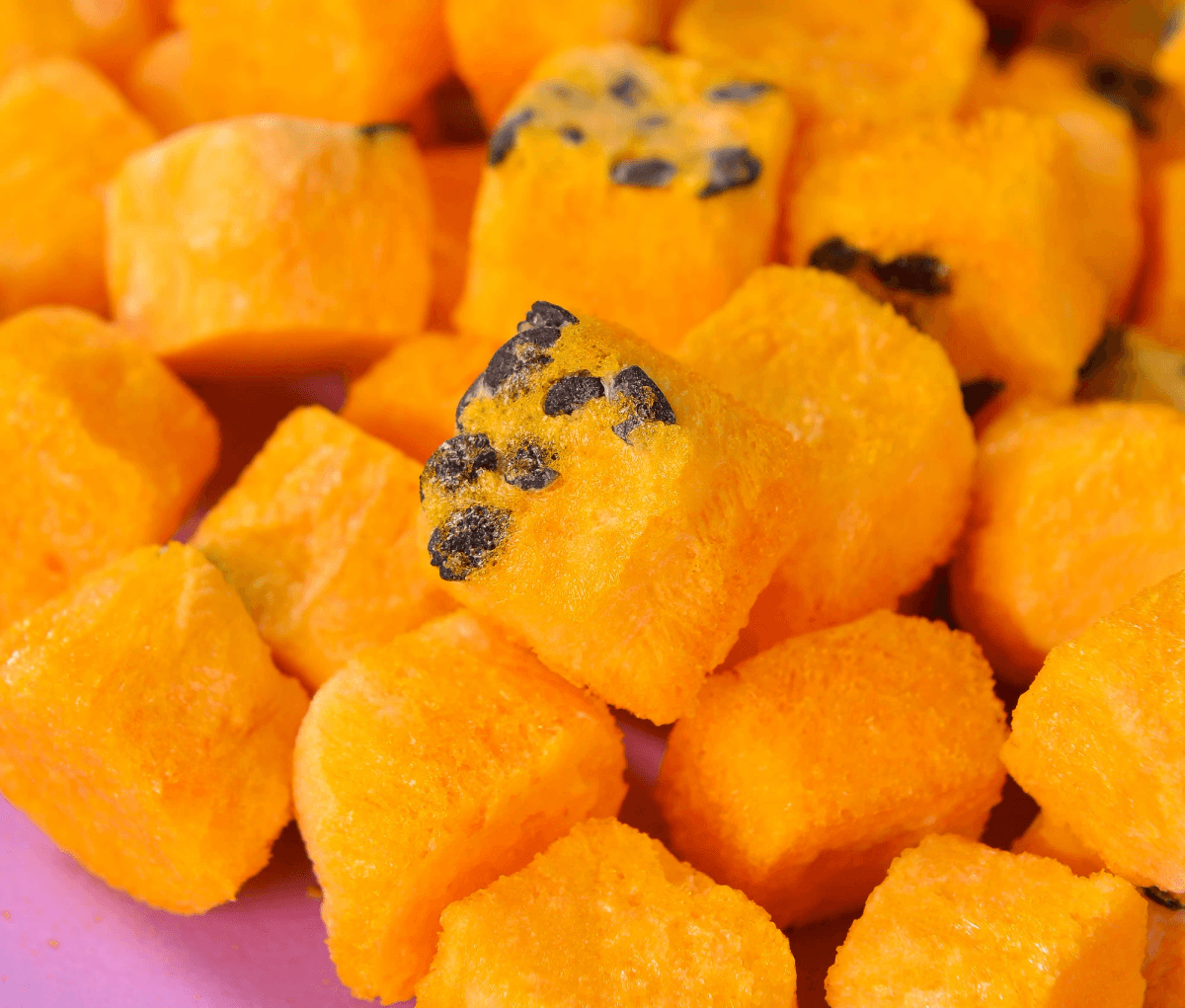
During freeze-drying, frozen water leaves by sublimation, creating pores where ice crystals were present. This structure supports rapid rehydration and a crisp dry bite, but it can also make pieces fragile. Air-dried fruit loses water through evaporation while the tissue is warm; collapse and shrinkage are more common, producing a smaller, denser piece.
Density affects far more than freight. Light freeze-dried pieces can float or segregate in a blend of dense nuts, chocolate, or granola. Dense air-dried pieces may feed more consistently by volume but can stick together or require anti-clumping control. A buyer should compare bulk density, piece strength, fines, stickiness, and hopper behavior with the actual base product.
Do Not Predict Stability From Texture Alone
A crisp ingredient is not automatically safer or more shelf-stable than a chewy one. Review moisture content and water activity for both. Air-dried fruits may be formulated or pretreated with sugars, acids, sulfites, oils, or other ingredients, while freeze-dried fruit may be sold as a single ingredient. The ingredient statement and processing aids need to be compared before making clean-label or nutrition claims.
Water activity also affects moisture migration in mixed products. A low-water-activity freeze-dried inclusion can absorb water from a higher-water-activity binder and become soft. A chewy air-dried inclusion can donate or absorb moisture depending on the surrounding matrix. Finished-product shelf testing is therefore more useful than judging either fruit alone.
Evaluate Flavor At Equal Fruit Solids
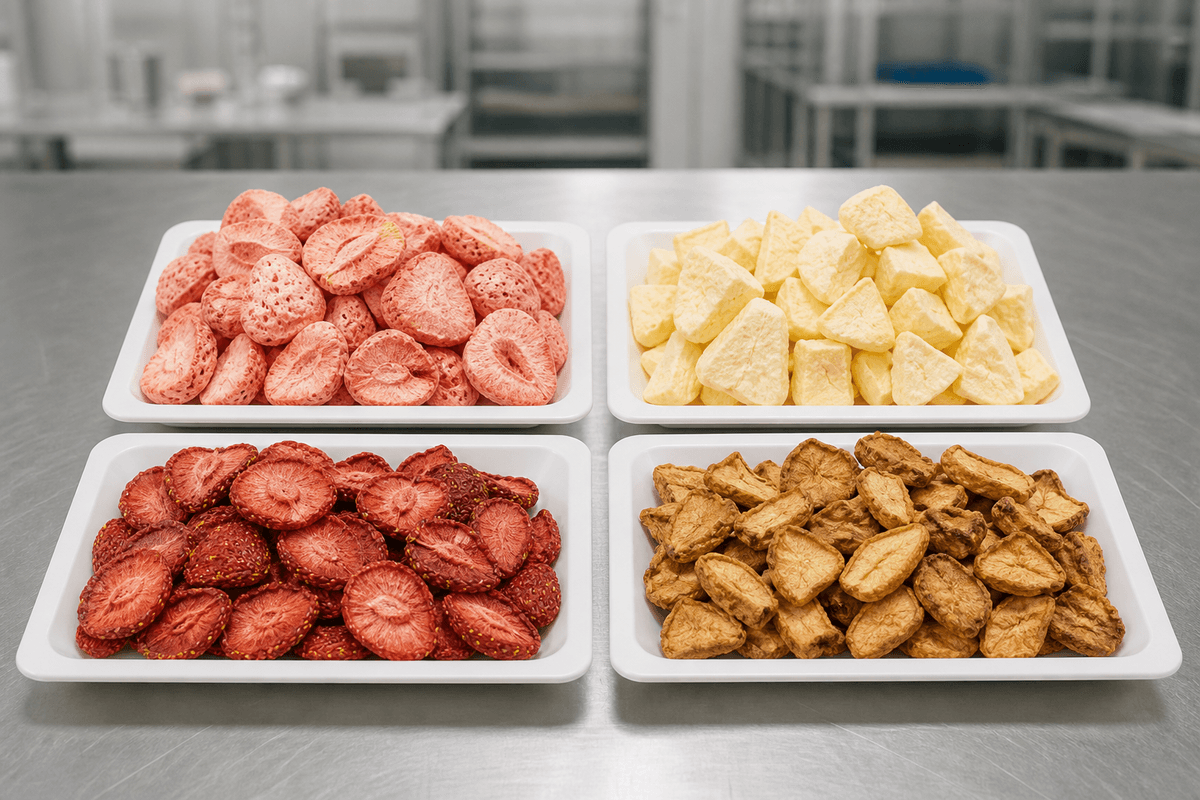
Compare samples at equivalent fruit-solids contribution, not equal volume. Freeze-dried fruit has low bulk density, so a large scoop may weigh surprisingly little. Air-dried fruit may occupy less space while delivering more grams per piece. Normalize dosage by weight and, when formulations differ, by actual fruit content.
Low-temperature processing often helps freeze-dried fruit retain recognizable aroma and color, but variety, maturity, pretreatment, oxygen exposure, and storage can outweigh the method name. Air-drying may create cooked or caramelized notes that are undesirable in a fresh berry concept but useful in bakery, tea, or spiced products.
Match Huaping Jingnan Formats To The Trial
Huaping Jingnan's freeze-dried product range includes visually distinct strawberry, blueberry, raspberry, mango, pineapple, banana, apple, citrus, and dragon fruit options. The product images show the porous slices, whole berries, and pieces that can create visible identity in cereal, chocolate, snack, and topping applications. Their low-density structure should be tested for breakage and segregation in each customer's line.
The website focuses on freeze-dried products and does not establish an air-dried range. For a genuine method comparison, buyers should obtain a documented air-dried control from an appropriate source, match fruit variety and maturity as closely as possible, and test both formats under the same application conditions. Huaping Jingnan's sample-development service can be used to discuss freeze-dried cut size, screening, and packaging for the selected benchmark trial.
Run A Cost-In-Use Trial
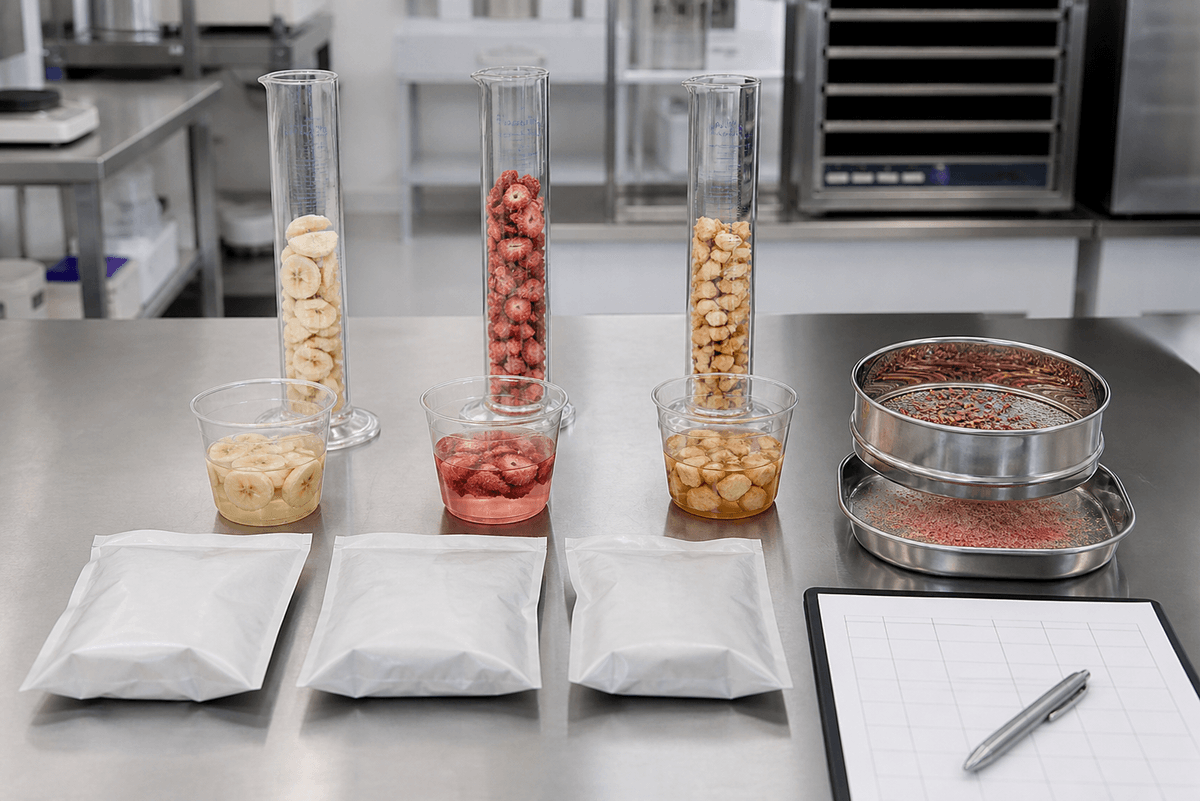
- Normalize the formula: Compare fruit solids, addition rate, and serving contribution.
- Measure line yield: Include dust, breakage, sticking, rejects, and cleanup time.
- Check package volume: Low-density pieces may require more storage and pack space per kilogram.
- Test the consumer stage: Evaluate dry bite, hydration time, flavor release, and appearance.
- Age the finished product: Compare moisture migration, color, texture, and package performance.
Conclusion
Freeze-dried fruit is often the stronger choice for crisp texture, recognizable shape, and rapid rehydration. Air-dried fruit may be better when the application needs density, chew, lower breakage, or a different cost structure. The manufacturing decision should be made from equal-solids trials, line yield, water activity, sensory performance, and finished-product shelf life.