
A freeze dried fruit supplier audit is most useful when it follows one lot from incoming fruit to a sealed pack. A generic site tour can show clean rooms and equipment, but it may not reveal how the supplier controls fruit maturity, cutting variation, tray loading, drying end point, post-drying humidity, particle breakage, or lot release. Buyers should use the audit to connect the production route with the ingredient performance they need in cereal, yogurt, bakery, beverage, snack, or private-label products.
The objective is not to impose a one-size-fits-all checklist. It is to ask evidence-based questions that fit the selected fruit format and application. A buyer sourcing fine mango powder will examine different risks from a buyer sourcing strawberry dice for a clear topping pouch. Both should nevertheless be able to trace the lot, understand the controls, and see how deviations are handled.
Audit The Raw Fruit Decision Before The Dryer
Start with receiving and preparation. Ask how the supplier identifies fruit variety, maturity, incoming condition, visual defects, and any raw-material acceptance criteria relevant to the project. For fruits that are peeled, cored, pitted, sliced, or diced, ask where size tolerance is checked and how seed or peel carryover is controlled. A poor piece profile is difficult to repair after drying.
Then connect preparation to the finished ingredient. If the customer needs a defined dice range, inspect how cutting is controlled and how out-of-range pieces are handled. If the application is a powder, ask how the supplier manages milling, mesh, heat exposure, flowability, and caking risk. If the product is a visible topping, ask to see the visual acceptance sample rather than relying on a verbal description of color.
Follow The Product Through Freeze-Drying
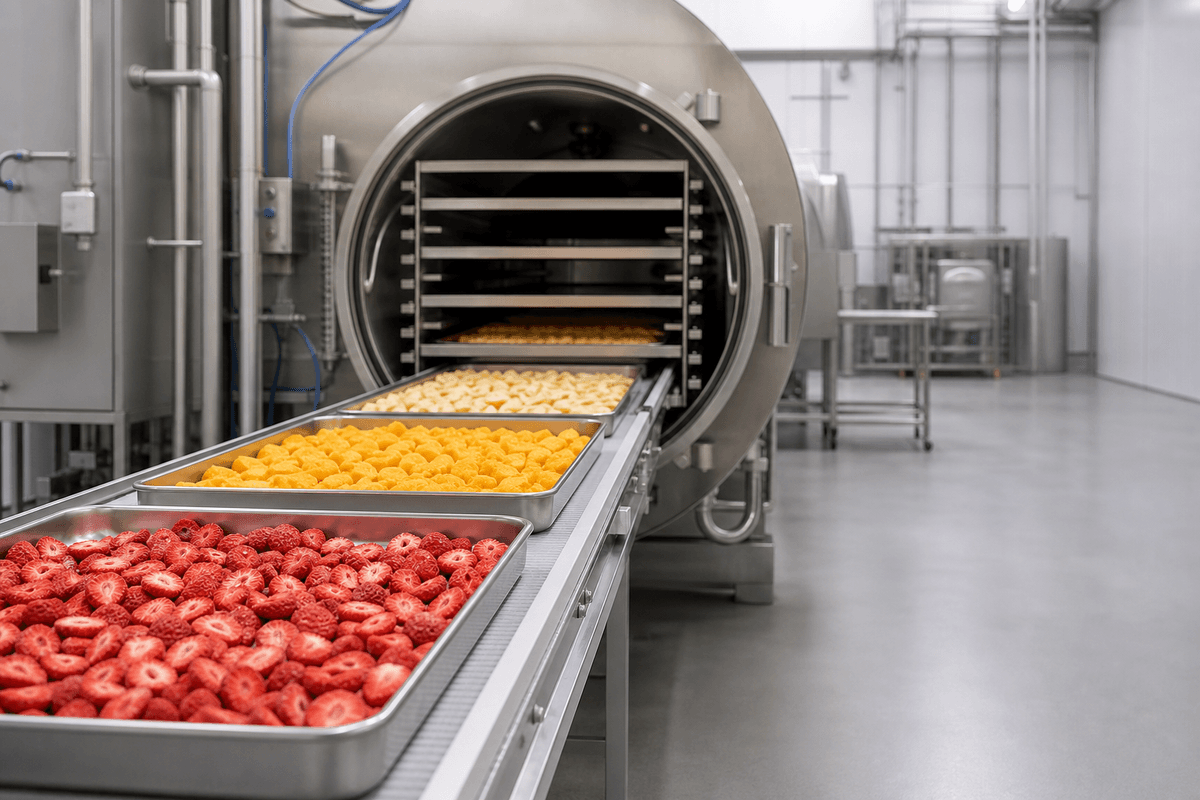
The audit should establish the process logic without demanding proprietary operating settings. Ask how the supplier controls loading consistency, tray arrangement, pre-freezing, and the end-of-drying decision for the product. Discuss how variation in fruit maturity, cut thickness, or loading can affect moisture removal, color, shrinkage, aroma, and piece integrity. The buyer does not need a factory to disclose every parameter to understand whether a control point exists and whether it is recorded.
Post-drying handling deserves equal attention. Freeze-dried fruit is porous and can pick up moisture before it is sealed. Ask where product cools, how long it may be exposed, how the packing area is managed, and how operators prevent mix-up or foreign-material introduction. If the buyer's product is sensitive to fines, ask where product is screened and at what point breakage is measured: before packing, after packing, or after simulated handling.
Ask Questions That Connect To The Application
- For cereal or granola: Where are breakage and fines measured after blending or transport simulation?
- For yogurt toppings: How is post-drying moisture pickup controlled before a separate topping pack is sealed?
- For bakery inclusions: Can the supplier provide a piece-size distribution that matches mixing, cutting, and visible fruit requirements?
- For powders: How are mesh, carrier use if any, bulk density, flowability, and caking evaluated?
- For all formats: Which records prove that the release sample, production lot, and shipping pack are the same controlled item?
Turn The Visit Into A Working Supplier Plan
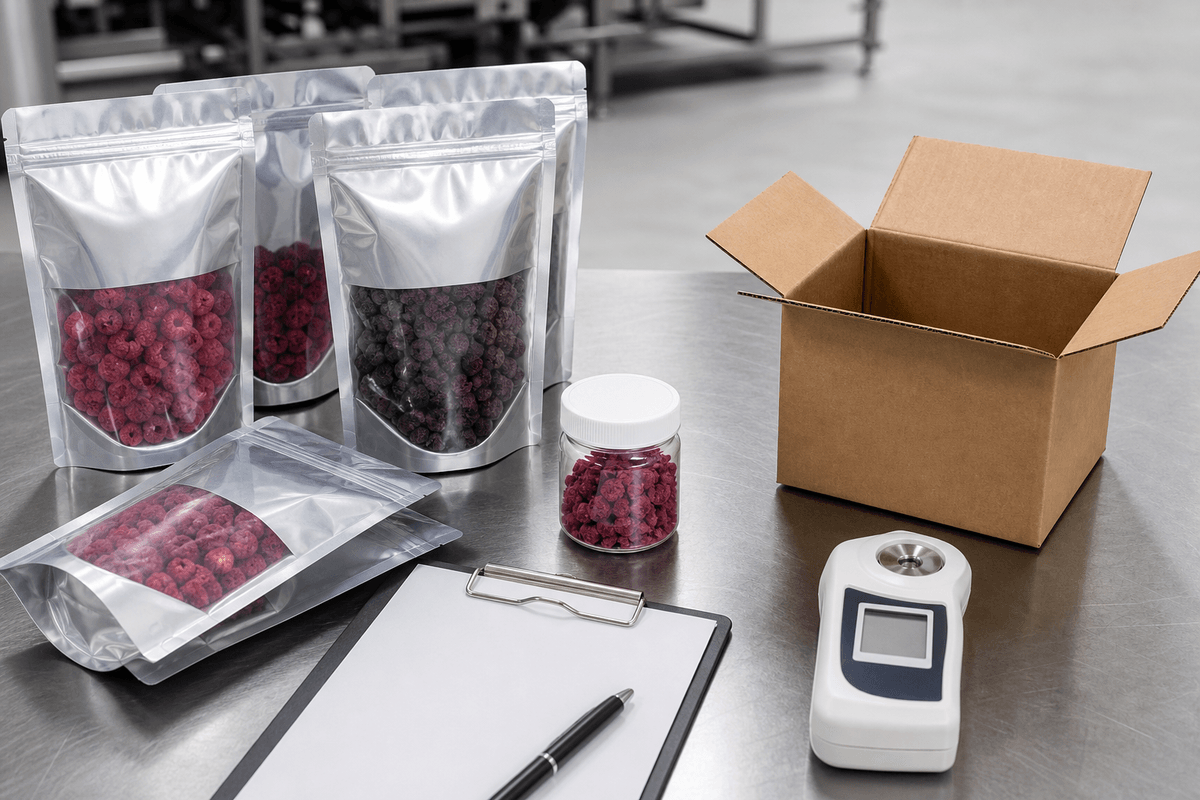
Huaping Jingnan identifies automated freeze-drying lines, professional QC laboratories, food-grade workshops, and cold-chain storage and packaging zones within its factory information. For an audit, those points become a useful route map: follow a proposed fruit lot from preparation through drying, screening, packing, and retained-sample release. The customer should request evidence for its own fruit, format, and market rather than assuming the same details apply across all items.
The company's custom sorting, freeze-drying, packaging, and sample-development options are most relevant when the buyer brings a clear specification and trial plan. A new dice size, powder mesh, fruit blend, or bulk pack should be reviewed as a controlled development project, with approved samples and documented changes before routine supply begins.
Conclusion
A strong freeze dried fruit supplier audit follows the lot, not the marketing story. Inspect raw fruit decisions, preparation, drying controls, post-drying exposure, release records, packaging, traceability, and the application's real acceptance test. That gives buyers evidence they can use when choosing, approving, and monitoring a supplier.