
Freeze dried fruit inclusions for granola must fit a tougher physical environment than many cereal inclusions. Granola often contains clusters, oats, nuts, seeds, sweet binders, chocolate, coconut, or coated pieces. These ingredients can be abrasive, dense, and uneven. Fruit inclusions must remain visible and appealing while surviving mixing, pouch filling, distribution, and shelf storage.
The central challenge is balance. Fruit pieces need to be large enough to be seen but strong enough to survive handling. They need low moisture and good packaging protection, but they also have to coexist with ingredients that may carry different water activity. A successful granola fruit inclusion program should therefore combine product specification, blend testing, and packaging validation.
Granola Needs A Different Fruit Inclusion Mindset
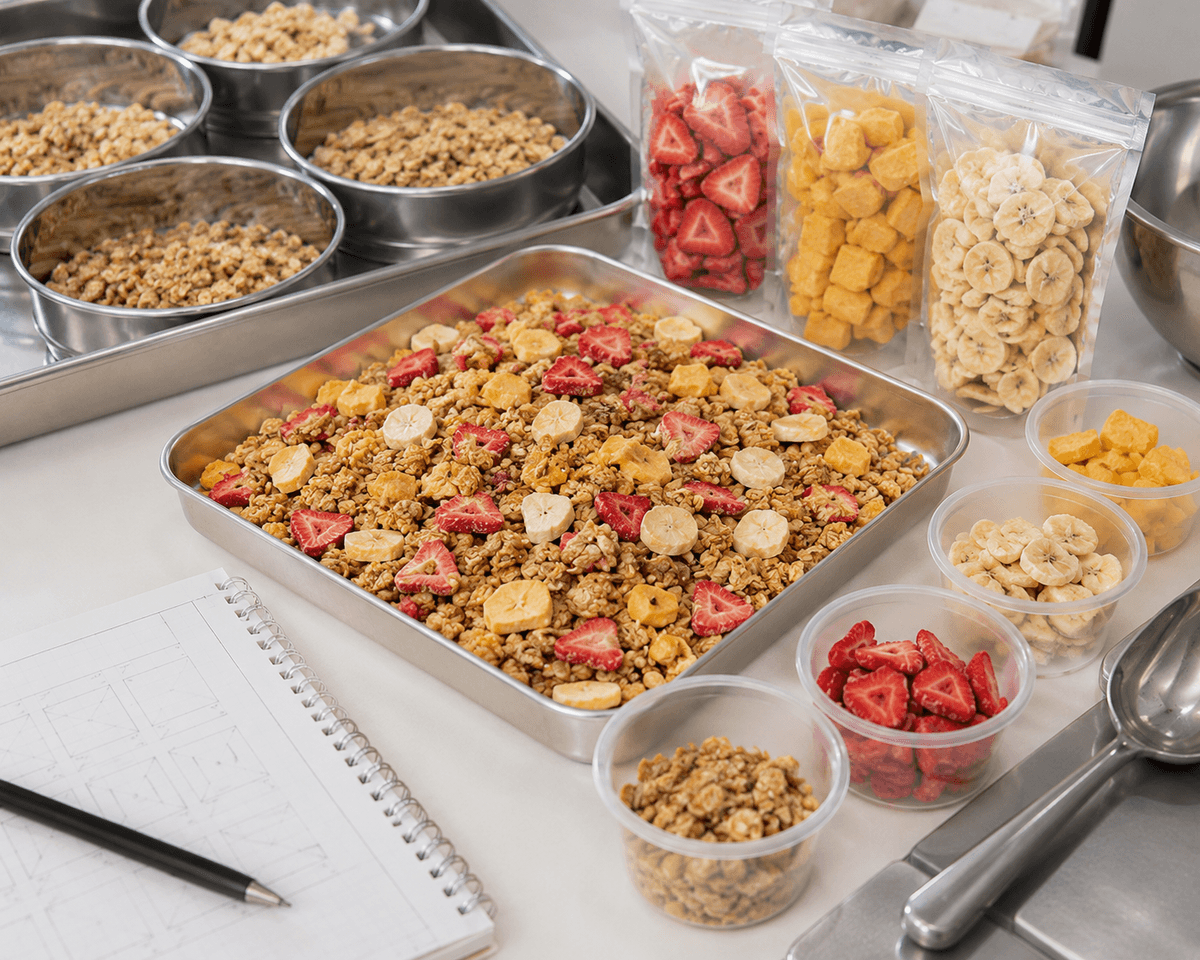
In a delicate cereal flake, smaller dices may be best. In granola, the fruit has to compete visually with clusters. Strawberry, mango, banana, apple, blueberry, and raspberry can all work, but the right choice depends on the granola format. Loose granola, cluster granola, high-protein granola, chocolate granola, and yogurt-coated granola can each create different moisture and breakage risks.
Huaping Jingnan's freeze-dried fruits category and freeze-dried berries category give buyers several fruit directions to evaluate. The supplier discussion should focus on piece format, not just fruit name.
Granola Inclusion Risk Map
| Granola Challenge | Fruit Inclusion Issue | Practical Test |
|---|---|---|
| Abrasive clusters | Fruit pieces fracture during mixing or transport. | Run a blend shake test and measure broken rate or visible fines. |
| Dense ingredient blend | Small fruit pieces disappear or settle. | Check fruit distribution after pouch filling and settling. |
| Moisture migration | Fruit or clusters soften during storage. | Conduct a short shelf trial in the intended package. |
| Visual fruit promise | Fruit is not visible enough in transparent pouches or serving bowls. | Photograph the finished blend after settling, not only after hand mixing. |
Moisture And Water Activity Are Critical
Granola blends often contain ingredients with different moisture and water activity profiles. Freeze-dried fruit is dry and porous, which can make it sensitive to moisture pickup. Sweet binders, coated ingredients, nuts, or inclusions with higher water activity can influence texture over time. Buyers should review water activity targets and packaging barrier needs for the full finished blend, not only for the fruit alone.
FDA technical information on water activity provides useful background for why water availability affects food stability and texture. For granola buyers, the practical question is whether the fruit and the cluster remain crisp together until the end of the intended shelf life. A short shelf trial in the actual pouch, jar, or carton is more useful than a desk review of fruit samples.
Process And Pack Considerations
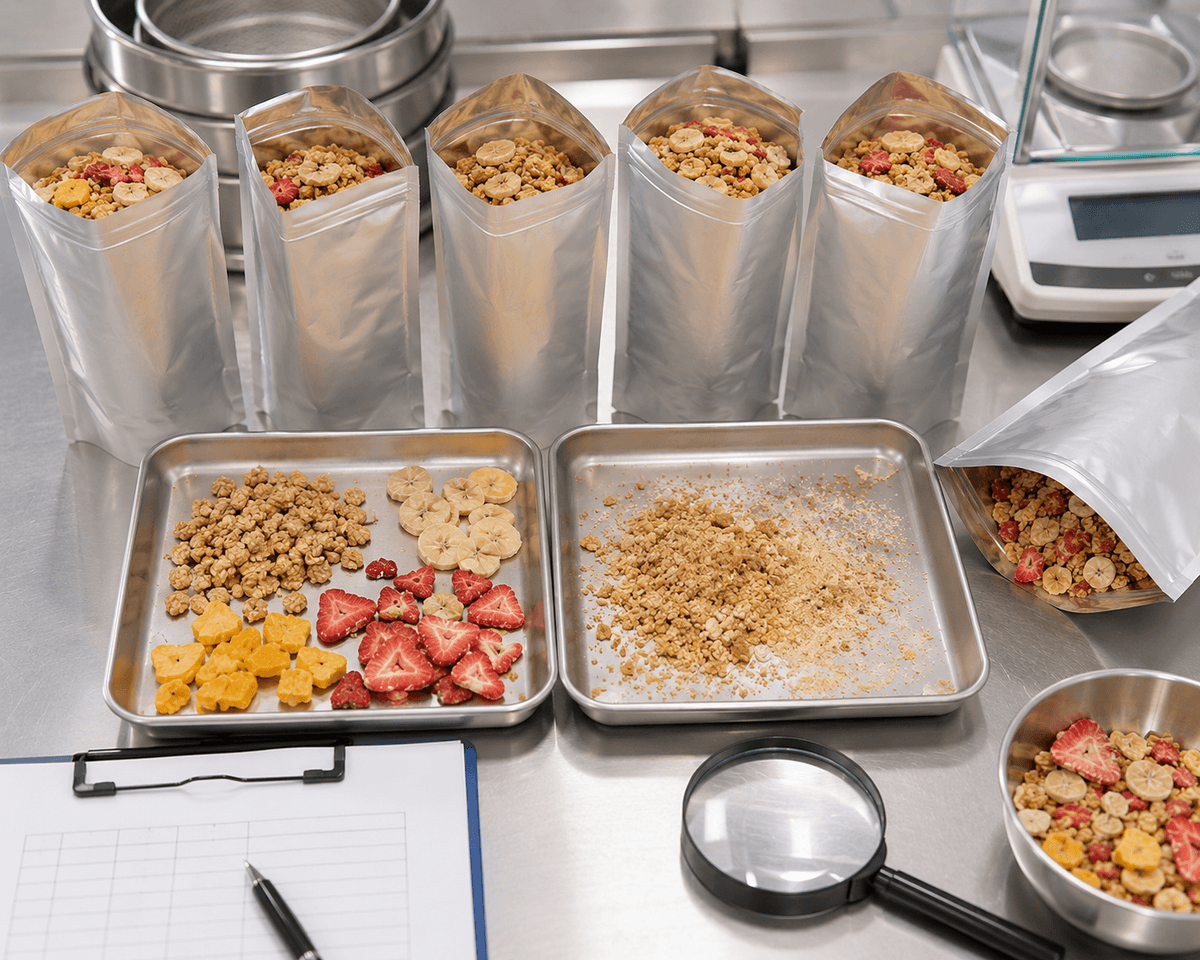
Granola fruit inclusions can be added before or after certain mixing steps, depending on the product design. In many cases, more delicate freeze-dried fruit should be protected from aggressive mixing. Buyers should test the addition point, mixer speed, and filling method. If fruit is added too early, it may fracture. If it is added too late, distribution may be uneven.
Packaging should also be chosen around fruit protection. Bulk liners, retail pouches, carton fill height, and nitrogen flushing or desiccants may be discussed depending on the product and market. Huaping Jingnan's custom product service page is relevant when buyers need private-label granola fruit formats, custom pack sizes, or bulk ingredient packaging.
Granola Cluster Size Changes Fruit Choice
Granola with large clusters may need larger fruit pieces so the fruit remains visible. A fine diced strawberry may disappear into oat fines, while a larger strawberry or mango piece may survive better visually. Loose granola with smaller oat flakes may need smaller fruit to avoid uneven scooping. Protein granola can be denser and more abrasive, so breakage testing becomes more important. The best fruit format should be selected by cluster size, not only by flavor.
Fruit timing also matters. Some brands prefer fruit added after baking or cluster formation to protect color and texture. If the fruit is exposed to heat, syrup, or high-moisture components, the buyer should test whether the freeze-dried piece loses crunch or changes color. These application details should be discussed with the supplier before a final dice size is approved.
- Define piece size: Granola often needs fruit pieces that remain visible among clusters.
- Set broken-rate limits: Review breakage after mixing and transport, not only before shipment.
- Check aw compatibility: Evaluate fruit and full granola blend together.
- Run pouch tests: Inspect settling, fines, and visual fruit distribution after handling.
- Retain samples: Keep approved fruit and finished blend references for future batches.
COA And Finished-Blend Checks
A granola buyer should request a COA for the fruit lot and also test the finished blend. Moisture, water activity, microbiology, and foreign-material controls belong in the supplier document review. Broken rate, fines, color, cluster distribution, and texture belong in the application test. Both are needed: the COA confirms the ingredient, while the blend trial confirms that the ingredient works in the product.
Where Huaping Jingnan Fits
Huaping Jingnan positions itself as a freeze-dried food manufacturer with fruit and berry options for wholesale buyers. Its about page describes fruit processing experience, freeze-dried products, QC laboratories, food-grade workshops, and packaging zones. For granola buyers, the relevant discussion is not simply whether fruit is available, but whether the piece size, packaging, and quality standard fit the granola system.
Conclusion
Freeze dried fruit inclusions for granola should be selected around cluster fit, broken rate, moisture behavior, and pouch performance. Buyers should test fruit in the full granola blend, define acceptance limits, and validate packaging before scaling. Huaping Jingnan is a relevant supplier to evaluate for granola fruit inclusion projects that need freeze-dried fruit range, B2B packaging support, and custom specification discussion.