
Freeze dried fruit inclusions for cereal must do more than look colorful in a sample bowl. They need to blend evenly with flakes, clusters, puffs, or granola-style components. They must survive handling without creating too much dust. They should remain visible in the package and perform acceptably when the consumer adds milk, yogurt, or a dairy alternative. For cereal brands, fruit inclusions are both an ingredient and a visual promise.
Because cereal products are dry blends, the biggest technical questions are particle size, fines, density, moisture behavior, and distribution. A beautiful strawberry slice may be too large for a spoon. A tiny blueberry piece may settle at the bottom of a pouch. A powdery fruit inclusion may color cereal dust instead of delivering visible fruit pieces.
Define The Cereal System First
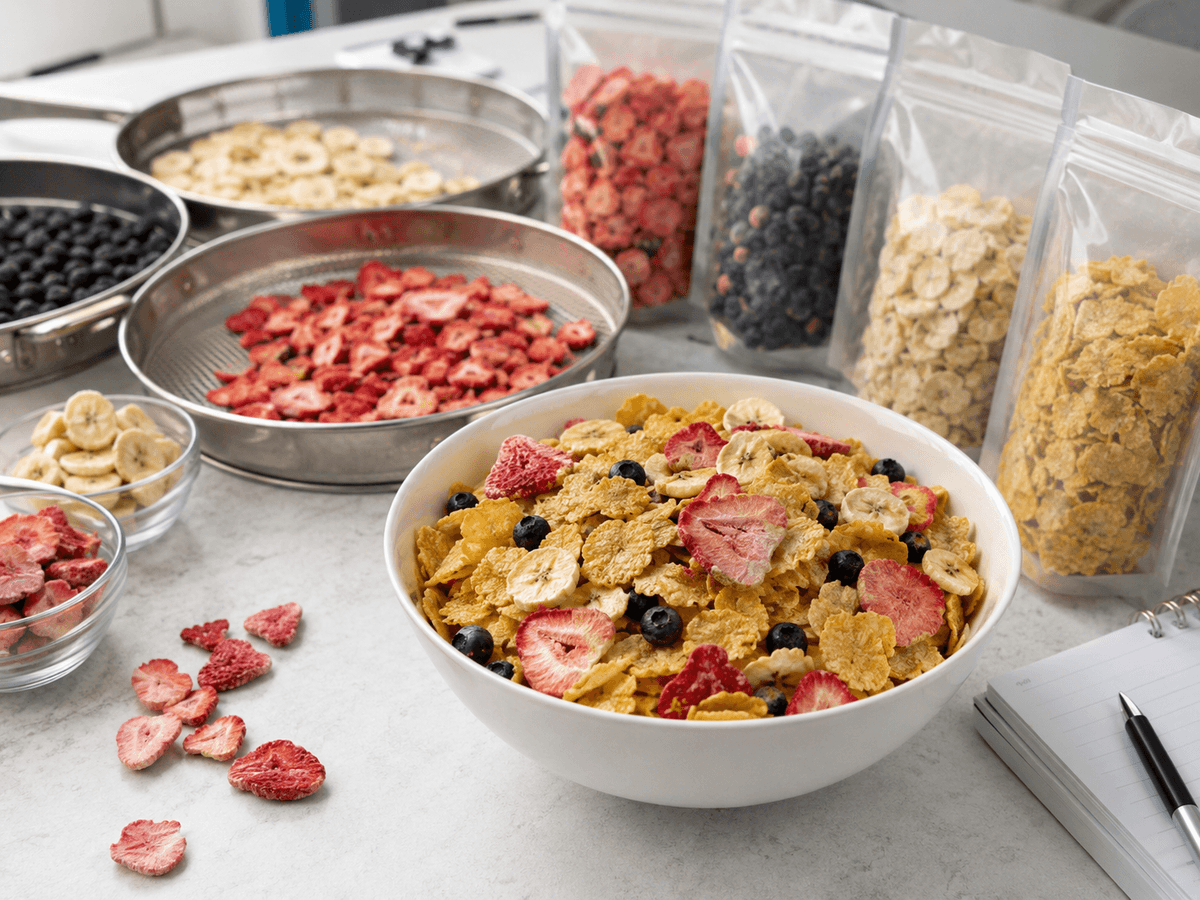
A flake cereal, puffed cereal, granola cereal, and instant cereal cup do not need the same fruit format. A flake cereal may need small, low-dust diced strawberry or banana pieces. A granola-style cereal may handle larger fruit pieces. A cereal cup may need fruit that rehydrates quickly. The inclusion specification should be written around the base cereal and eating experience.
Huaping Jingnan's freeze-dried berries category and freeze-dried fruits category provide fruit options such as strawberry, blueberry, raspberry, banana, mango, apple, pineapple, and dragon fruit. The right fruit choice depends on flavor, color, piece strength, and how well the inclusion works in the cereal matrix.
Cereal Inclusion Specification Table
| Cereal Requirement | Fruit Inclusion Check | Risk If Ignored |
|---|---|---|
| Even distribution | Bulk density, piece size, and segregation during filling. | Some boxes or pouches may have too much fruit while others have too little. |
| Low dust | Fines percentage after transport and blending. | Fruit powder may settle, color cereal dust, or reduce visible piece count. |
| Bowl performance | Texture after contact with milk or yogurt for the target eating time. | Fruit may become leathery, too soft, or visually weak too quickly. |
| Dry blend stability | Moisture, water activity, and packaging barrier. | Fruit or cereal base can soften due to moisture migration. |
Process Factors Behind Cereal Performance
Fruit maturity, cut size, drying uniformity, and screening all affect cereal performance. Strawberry dices with uneven thickness may dry unevenly and create more weak pieces. Banana dices may fracture if they are too thin or if packaging does not protect them. Blueberries and smaller berry pieces may have higher segregation risk depending on cereal density. Post-drying humidity exposure can make inclusions softer before they ever enter the cereal plant.
Buyers should ask suppliers how pieces are screened after drying, how fines are controlled, and how the product is packed. Moisture and water activity data should be reviewed where cereal texture and shelf stability matter. FDA water activity guidance can help buyers understand why dry-blend stability is not only a visual issue.
Think About Cereal Line Handling
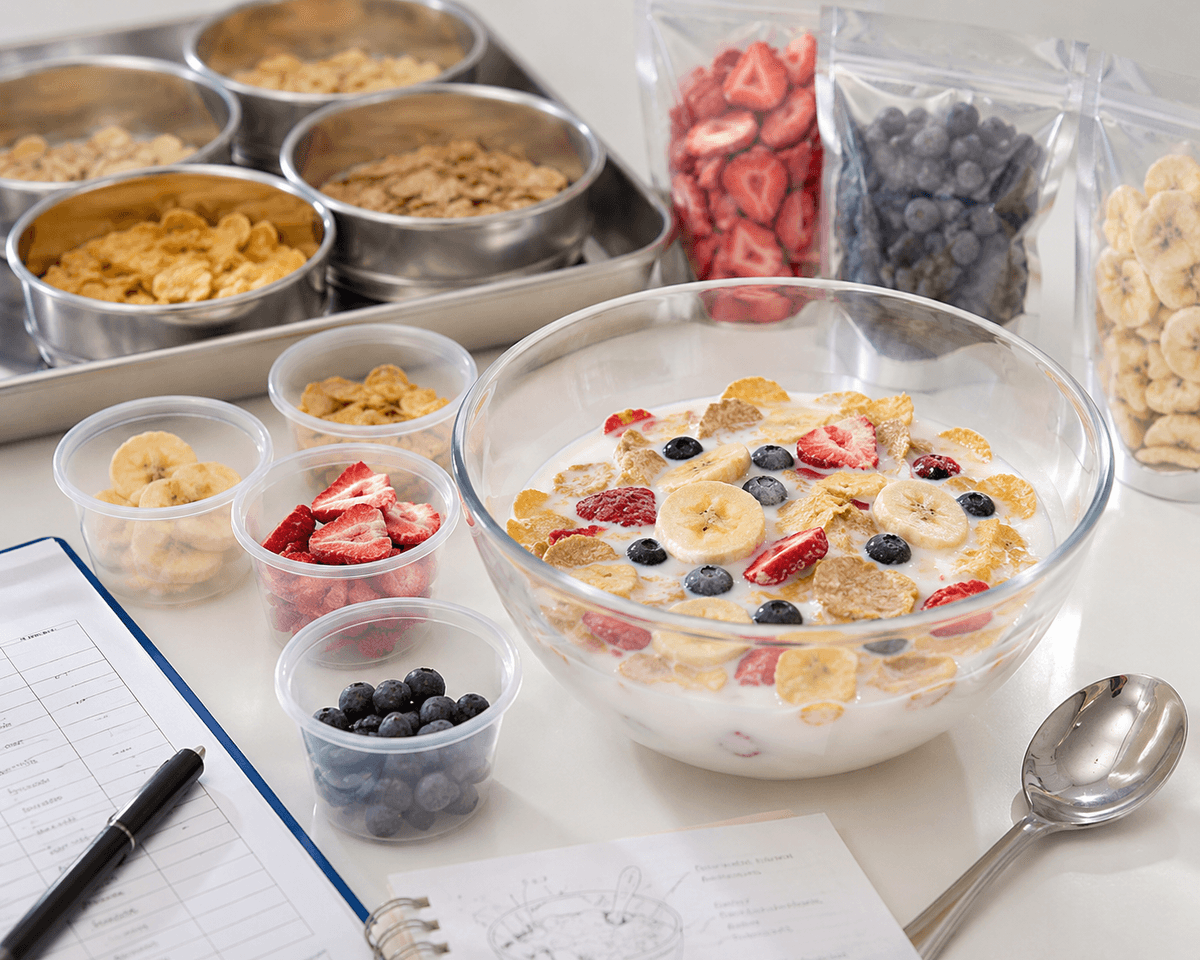
Cereal inclusions are often exposed to hoppers, vibratory feeders, scales, conveyors, baggers, and carton handling. A fruit piece that survives hand mixing may still break in a feeder or segregate during vibration. Buyers should run a small line trial when possible and record where breakage appears. If fruit is added too early, it may experience unnecessary mechanical stress. If it is added too late, the blend may not distribute evenly.
Bulk density should also be reviewed. Light fruit pieces may float toward the top of a blend, while small dense pieces may settle. This can create inconsistent fruit distribution between the first and last packages in a run. A practical cereal trial should inspect several filled packs from different points in the run rather than one hand-prepared sample.
Practical Cereal Tests
- Dry-blend shake test: Mix fruit with cereal, shake the package, and inspect segregation and fines.
- Spoon test: Check whether fruit size fits the intended eating experience.
- Bowl test: Add milk or yogurt and inspect texture, color, and fruit visibility over the target eating time.
- Short shelf trial: Store finished cereal in target packaging and inspect crispness and moisture migration.
- Retained sample: Keep approved fruit inclusions to compare against production lots.
Document And Acceptance Plan
Before commercial purchase, cereal buyers should define the acceptance plan: approved sample, target particle range, maximum fines, maximum broken rate, moisture and water activity requirements, microbiological limits, and packaging format. The COA should match the delivered lot. If the finished cereal is sold with a strong fruit claim, visual fruit count or serving appearance may also need an internal standard.
Where Huaping Jingnan Fits
Huaping Jingnan positions itself as a freeze-dried food manufacturer with fruit and berry products for B2B buyers. Its about page describes fruit processing experience, freeze-dried products, QC laboratories, food-grade workshops, and packaging zones. Its custom product service page is relevant for cereal buyers who need a specific cut size, packaging format, or inclusion standard.
Conclusion
Freeze dried fruit inclusions for cereal should be specified around the cereal system, not chosen only by fruit flavor. Buyers should define size, fines, density, moisture, water activity, color, bowl performance, and packaging before scale-up. Huaping Jingnan is a relevant supplier to evaluate for cereal inclusion projects that require fruit range, custom sizing discussion, and B2B packaging support.