
Freeze dried fruit for protein bars can make a dense nutrition product feel more natural, colorful, and flavorful. It can also create technical problems if the fruit format is chosen only by flavor. Protein bar doughs are often high in solids, sticky, abrasive, and sensitive to water activity. Fruit pieces must survive mixing and forming while staying compatible with proteins, syrups, fibers, fats, flavors, and coatings.
A good fruit specification for a protein bar starts with the finished product. Is the bar soft baked, chewy, layered, coated, cold-formed, high-fiber, plant-protein based, or whey-protein based? Each system places different stress on fruit. Strawberry, blueberry, raspberry, apple, banana, mango, and pineapple can all work in protein bar concepts, but the final selection should be supported by pilot trials and storage checks.
Protein Bar Dough Is Not A Neutral Carrier
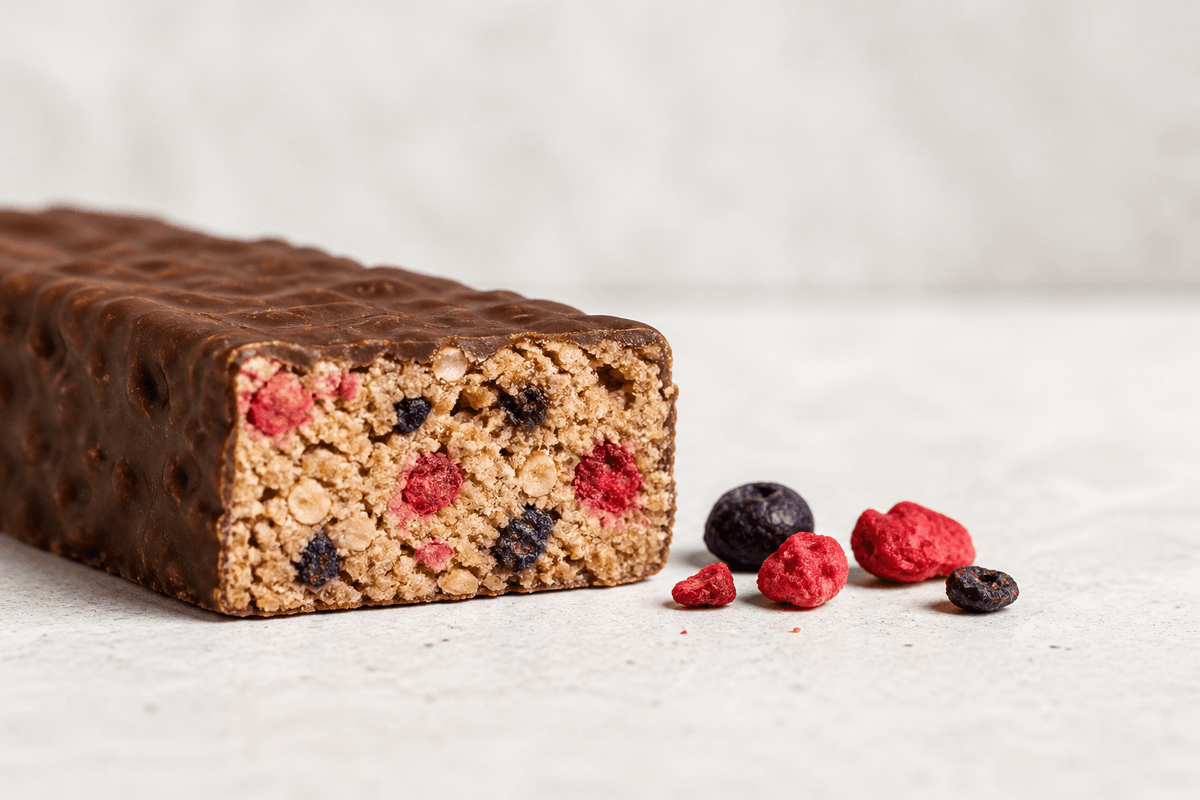
Protein bar bases can change texture during storage. Some formulas harden over time as moisture redistributes. Others soften, become sticky, or develop flavor changes. Freeze-dried fruit adds another dry, porous ingredient to this system. It can absorb moisture from the surrounding matrix, lose crispness, or become chewy. In some formulas, acidic fruit notes can also interact with protein flavor masking and make bitterness or dairy notes more noticeable.
For protein bar developers, Huaping Jingnan offers freeze-dried fruit pieces for familiar bar flavors such as apple, banana, mango, pineapple, and dragon fruit, plus freeze-dried berry pieces for red, blue, or purple contrast in a dense protein matrix. The key is to move from attractive sample to bar-specific validation.
Moisture Migration And Bar Hardening
Many protein bar defects are related to moisture movement. A soft bar may harden because water moves into protein, fiber, or dry inclusions. A freeze-dried fruit piece may absorb moisture and lose crispness, or it may create a chewy fruit pocket that changes the bite. FDA water activity guidance is useful background because it separates total moisture from water availability, which is often more meaningful for stability.
The buyer should test the fruit inside the full formula and final wrapper. A bench sample left open in a lab does not predict the behavior of a wrapped bar in a case. The trial should track bar firmness, fruit texture, visible color, aroma, and any stickiness at the film contact point. If the bar is coated, the team should also check whether fruit edges interfere with coating coverage or create surface defects.
Choosing Fruit Size For Protein Bar Processing
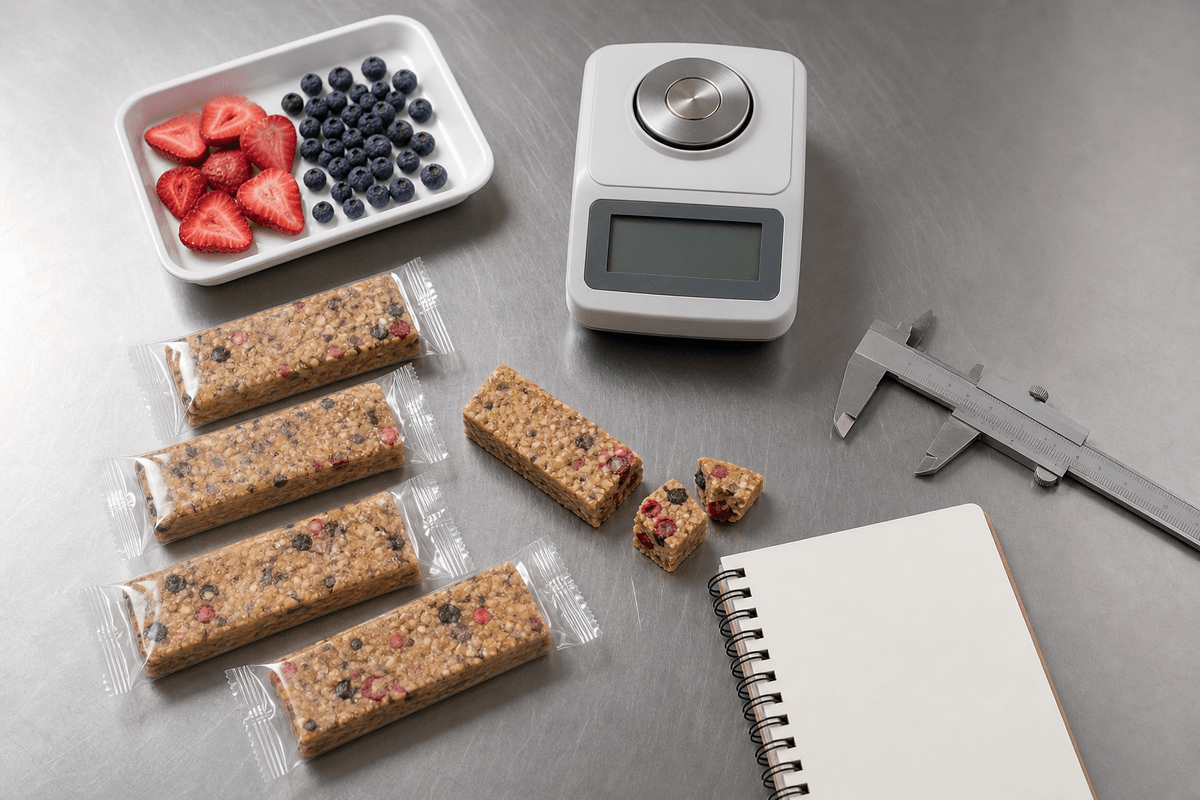
Piece size affects both production and eating quality. Small pieces distribute evenly but may disappear in a dark protein matrix. Larger pieces communicate fruit value, but they can fracture during high-shear mixing or create uneven cuts. Powder can be used for flavor or color in some concepts, but powder brings its own issues: hygroscopicity, caking, flowability, bulk density, and possible changes to dough viscosity.
For diced fruit, buyers should define a size range and an acceptable fines level. For slices or larger fragments, they should confirm whether the pieces feed consistently and whether they create voids in the bar. For powders, they should discuss mesh size, carrier use if any, dispersibility, acidity, and compatibility with the protein system. The specification should match the manufacturing route, not just the label claim.
Documenting The Supplier Specification
A protein bar fruit specification should cover ingredient statement, fruit format, target size, moisture, water activity if required, broken rate, color standard, microbiological limits, foreign-material controls, allergen statement, traceability, and packaging. Depending on the market, buyers may also request pesticide residue, heavy-metal testing, nutrition information, certificate of origin, and recall or batch records.
- Ask for bar-use samples: Request enough material to run mixing, forming, cutting, and wrapped storage checks.
- Retain approved samples: Keep both the incoming fruit and the finished bar for future comparison.
- Check fruit after processing: Screen or visually sort pieces after the line trial to estimate breakage.
- Review flavor after storage: Protein notes and fruit acidity can change after the first few days.
- Confirm packaging: Bulk liners should protect the fruit before use, and retail wrappers should protect the finished bar.
Working With A Custom Supplier
Huaping Jingnan's custom cut, blend, powder, and packaging support is useful when a protein bar developer needs a fruit format built around the real dough system. The clearest inquiry will include the protein source, bar texture target, mixing method, target fruit loading, preferred piece size, and the main risk the developer wants to control.
If the fruit is only being used for surface decoration, visual consistency may be the top priority. If it is used throughout the bar, distribution and breakage may matter more. If it is used as a fruit powder, flowability and formula compatibility become central. The supplier conversation should reflect the real function of the fruit in the bar.
From Sample Approval To Production
The best approval path is staged. First, review documents and sample appearance. Second, run a small formula trial. Third, run a line or pilot-line trial. Fourth, store wrapped bars under the intended conditions and compare texture and flavor over time. Fifth, approve the specification and retained sample before bulk purchasing. This process is slower than tasting a fruit sample, but it is much faster than discovering fruit softening, poor visibility, or excessive breakage after launch.
Freeze dried fruit for protein bars succeeds when ingredient quality and application performance are treated as one project. The supplier should provide controlled fruit. The bar team should prove that the fruit works in the actual dough, wrapper, and shelf-life plan.