
Freeze dried fruit for granola bars has to do more than provide fruit flavor. It must survive a dense formula, remain visible after mixing and forming, and stay stable beside binders, oats, nuts, seeds, chocolate, or protein crisps. A piece that looks perfect in a sample bag can behave very differently after it is folded into a sticky syrup system and pressed into a bar slab.
For bar developers, the most important question is not simply which fruit tastes best. The better question is which fruit format can hold color, structure, and eating quality inside the finished bar. Strawberry, apple, mango, banana, blueberry, raspberry, pineapple, and dragon fruit can all create useful product concepts, but each format needs a practical approval process built around size tolerance, broken rate, water activity, and shelf testing.
Granola Bars Are Tough On Fruit Pieces
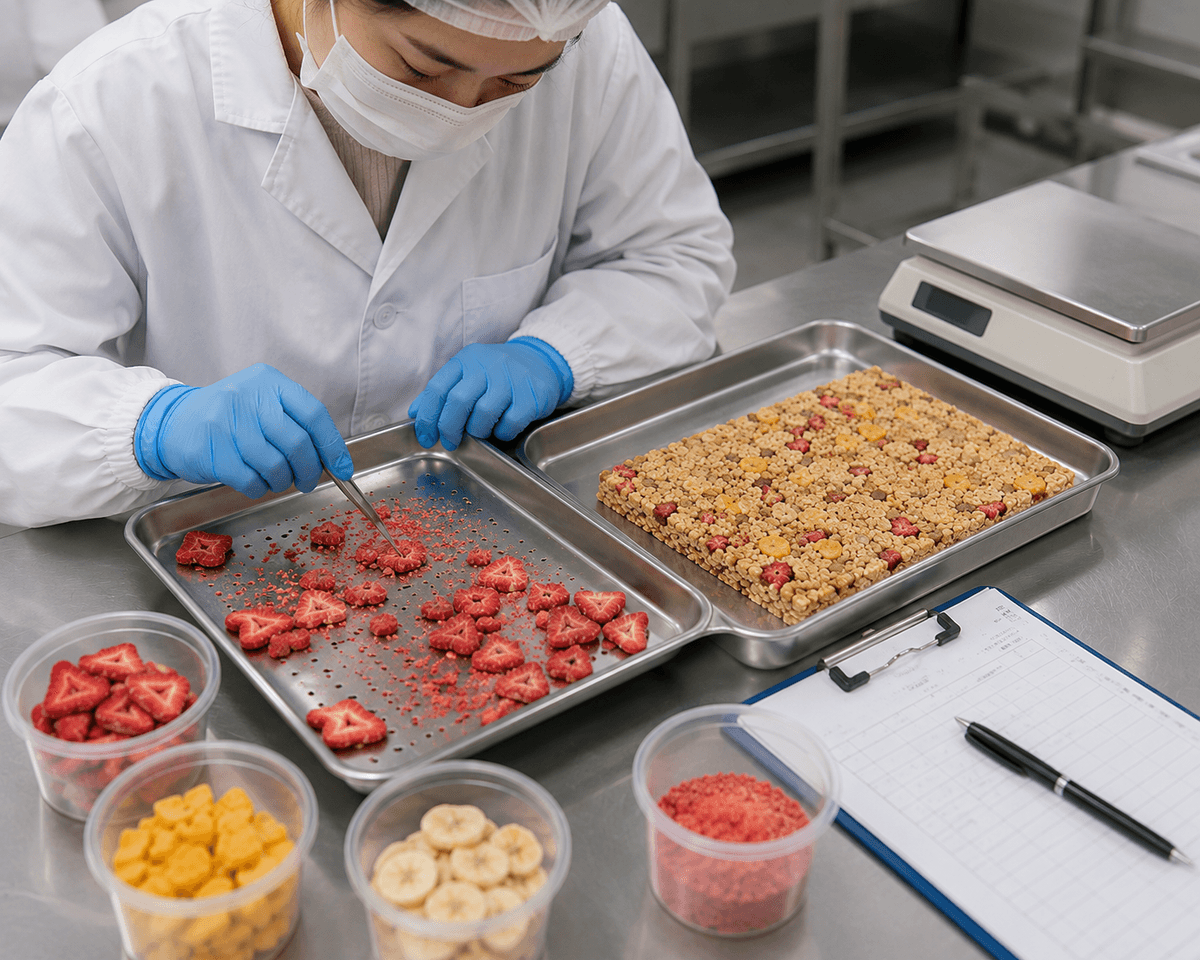
A granola bar matrix is usually more aggressive than a loose cereal blend. Fruit may be exposed to syrup, compression, rollers, cooling tunnels, guillotine cutters, flow wrapping, and carton packing. Brittle pieces can fracture during mixing. Very fine particles can disappear into the oat matrix. Larger pieces can create weak points in the bar or show unevenly across the cut face.
For bar concepts, Huaping Jingnan's freeze-dried fruit pieces and freeze-dried berry pieces give developers several product roles to test. Apple and banana can support mild breakfast-style bars, mango and pineapple can bring tropical color, and strawberry, blueberry, or raspberry can create a stronger fruit signal in the cut face. The commercial specification, however, should be approved only after the fruit is tested in the intended formula and bar-forming process.
Fruit Format Decisions For Granola Bars
| Decision | Why It Matters | What To Test |
|---|---|---|
| Dice or piece size | Controls visibility, bar cut quality, and fruit distribution. | Measure size distribution before mixing and after forming. |
| Broken rate and fines | Excess powder can dull color and change eating texture. | Screen a known weight after pilot mixing and compare with the original lot. |
| Water activity fit | Fruit can absorb moisture from binders or soften during storage. | Check aw of the fruit, binder, and finished bar during a short shelf trial. |
| Color and seed tolerance | Visible pieces carry the fruit promise on the bar surface and cut face. | Keep a retained sample and define acceptable color variation or seed presence. |
Water Activity And Binder Moisture
Freeze-dried fruit is porous and dry, which is useful for flavor concentration but sensitive to moisture pickup. Granola bar binders can include syrup, honey, fruit paste, glycerin, soluble fiber syrup, nut butter, chocolate, or fat-based coatings. These ingredients may create a water activity gradient between the fruit and the bar matrix. FDA technical information on water activity is helpful background because it explains why available water, not only total moisture, affects dry-food stability.
A buyer should not approve fruit only by reviewing fruit moisture in isolation. The finished bar should be tested after wrapping in the intended film. During storage, the bar developer should check whether fruit pieces become leathery, whether the oat matrix hardens, whether the bar surface grows sticky, and whether color migrates into nearby binder. These changes can appear even when the incoming fruit looked acceptable.
Mixing Order Can Protect The Fruit
The addition point can decide whether fruit pieces remain attractive. If freeze-dried fruit is added too early, the mixer may reduce it to powder. If it is added after the syrup has cooled too far, distribution may be poor. If it is added with abrasive nuts or hard cereal pieces, broken rate may rise quickly. Pilot mixing should therefore record addition order, mixer speed, mix time, syrup temperature, and batch size.
The bar line also matters. A gentle slab former can handle larger pieces better than a high-compression system. A rotary cutter or guillotine may drag fruit pieces through the bar face and create smears or voids. Developers should photograph the cut face, not only the top surface, because consumers often see fruit value when they break or bite the bar.
Specification Points Buyers Should Confirm
A commercial specification for granola bar fruit should include fruit variety or material description, ingredient statement, size range, moisture or moisture target, water activity target if used, broken rate or fines limit, color standard, foreign-material controls, metal detection expectation, microbiological limits, allergen statement, traceability, and packaging format. For berries, the buyer may also need to define seed and skin tolerance. For apple, mango, pineapple, or banana, color and browning limits may be more important.
- Request the actual lot COA: Review moisture, microbiology, and relevant quality results for the delivered batch.
- Approve with a retained sample: Keep the fruit sample and a finished-bar sample from the same trial.
- Measure fines after processing: Incoming quality and in-bar survival are different checks.
- Test the wrapper: Film barrier, seal quality, and headspace can affect fruit texture over time.
- Run a consumer-style cut test: Look at fruit visibility on the top, bottom, side, and bite face.
Application Trial Before Bulk Ordering
Before placing a bulk order, the bar team should run a controlled application trial using the intended formula. The test should include a weighed fruit addition, a recorded process condition, a screen check for fines, and a short storage check in final packaging. If the buyer is comparing several fruit options, each option should be tested under the same mixing and forming conditions so the result is fair.
When a buyer needs a specific fruit cut, packaging format, or private-label ingredient solution, Huaping Jingnan's custom freeze-dried product support should be framed around the bar itself. The most productive supplier conversation will include the bar type, target fruit loading, expected piece size, wrapper format, and the main failure to avoid, such as breakage, softening, color loss, or poor distribution.
Quality Documents For A Bar Program
For a production bar launch, a buyer may need a product specification, COA, ingredient statement, nutrition information, allergen statement, certificate of origin, pesticide residue or heavy-metal testing where required, microbiological report, and traceability records. These documents should match the fruit lot actually used in production. If the formula is exported or sold through retailers, document requirements should be confirmed before the first bulk shipment.
The strongest approval process combines supplier documentation with practical bar testing. Documentation confirms that the ingredient meets agreed controls. The pilot bar confirms that the ingredient works in the real product. That combination reduces surprises when freeze dried fruit for granola bars moves from sample bench to