
Freeze-dried fruit can add recognizable fruit, concentrated sensory impact, color, and texture contrast to functional snack concepts. It does not, by itself, make a product functional or justify a health claim. The finished formula, serving size, nutrient data, substantiation, intended market, and label determine what the brand may communicate.
For developers, the more useful question is: which fruit format performs the intended job while surviving production and shelf life? Huaping Jingnan's freeze-dried fruit selection includes tropical, citrus, apple, banana, and other visible options, while its berry range offers strong color and tart-sweet profiles for snack development.
Control Moisture Across The Whole Formula
Freeze-dried fruit is dry and porous, so it readily exchanges moisture with binders, nuts, chocolate, protein crisps, and the surrounding air. In a soft bar, the fruit may become chewy or hard as the system equilibrates. In a dry mix, a higher-moisture component may soften the fruit. Measure water activity of individual ingredients and the finished snack, then observe texture over time in the intended package.
Do not assume that a low water activity makes the product sterile. Freeze-drying is not necessarily a kill step. Supplier microbiological criteria, hygienic post-drying handling, allergen control, and the safety of every component remain part of product approval.
Design For Serving Consistency
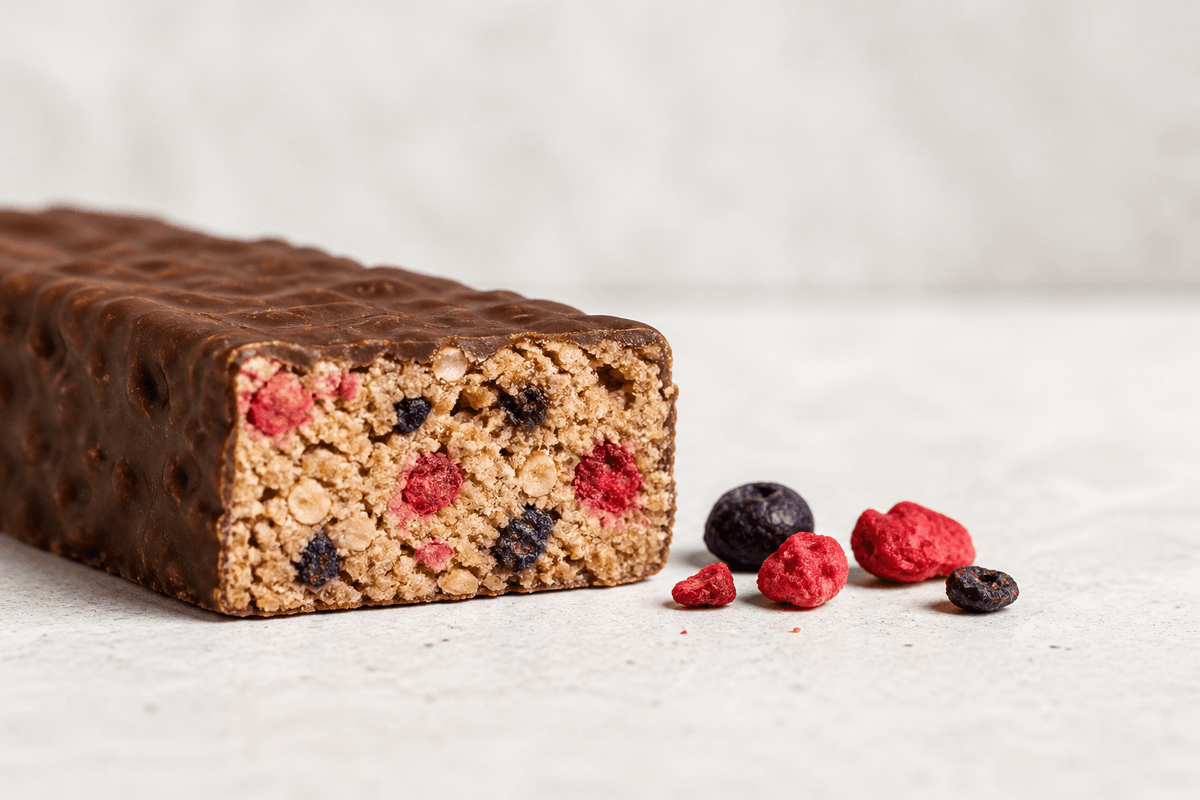
When a snack makes nutrient or ingredient claims, serving consistency matters. Different piece sizes and bulk densities can segregate, causing some portions to contain far more fruit than others. Test the top, middle, and bottom of mixed batches and finished packages. A controlled dice or granule may improve distribution, while larger visible pieces may require process adjustments or a different filling method.
Specifications should cover size distribution, fines, broken pieces, bulk density, moisture or water activity, color, sensory profile, and relevant microbiological limits. For powder, confirm carrier use, mesh, flowability, caking, and dose repeatability. Natural variation can be allowed while keeping commercial serving performance predictable.
Validate Claims Separately From Ingredient Appeal
Words such as functional, immunity, energy, antioxidant, high fiber, or source of vitamins can trigger different evidence and labeling requirements. A visually vibrant berry does not prove a nutrient claim in the finished serving. Use finished-product nutrition analysis and market-specific regulatory review. Avoid disease, treatment, or prevention language.
- Define the consumer benefit and verify that it is legally supportable.
- Calculate the fruit contribution at the actual serving size.
- Check nutrient stability through processing and the intended shelf life where relevant.
- Confirm ingredient and allergen declarations for every component.
- Keep marketing language aligned with the evidence on file.
Run The Snack Through Its Real Stresses

Conduct pilot mixing, forming, coating, cutting, and filling. Measure fruit damage before and after each high-impact step. Use a pouch shake or case transport simulation, followed by sieve analysis and sensory review. Store product in the final packaging and monitor texture, caking, color, aroma, and oil interaction. For coated snacks, assess seasoning loss and color transfer onto the consumer's hands.
Include the consumer's use pattern in the trial. A multi-serve pouch may be opened ten or more times, allowing humid air to enter and small pieces to settle. Compare first and final servings for fruit distribution, dust, texture, and flavor. If the product will be carried in a gym bag, lunchbox, or e-commerce parcel, add the relevant compression and vibration stresses rather than relying on static warehouse samples.
Cost the ingredient by delivered snack performance, not price per kilogram alone. Large fragile pieces may generate more unusable fines and lower line yield; a denser or smaller cut may require less package volume and distribute more consistently. Include freight cube, breakage, seasoning loss, overfill, rejected product, and package size in the comparison. The least expensive quoted fruit can become the higher-cost finished serving.
At commercial launch, establish an incoming reference and a finished-snack control. Review fruit size, fines, bulk density, moisture or water activity, sensory quality, and documents before release to production. Trend consumer complaints and bag-bottom dust by lot. These records reveal whether variation begins with the ingredient, the snack process, the package, or distribution handling.
Huaping Jingnan displays freeze-dried fruit pieces suitable for discussion across snack, cereal, dessert, and food manufacturing contexts. Its custom cut and packaging workflow can be used to explore a specific piece format or bulk pack, subject to sample and production confirmation. A strong inquiry sent through the snack ingredient contact includes the snack matrix, desired serving, mixing process, package, claim strategy, and target specification.