
Natural fruit powder for food coloring should be tested in the real formula, process, and package. A bright powder in a white dish may become muted in dough, shift hue in an acidic drink, speckle in frosting, settle in a beverage, or introduce more fruit flavor than the formula can accept. Its value comes from the combined color, flavor, aroma, acidity, and fruit identity it brings, but those same properties create formulation limits.
This article focuses on application trials in bakery and beverage systems. Regulatory status and label declaration still require market-specific review because a material used to impart color can be regulated as a color additive even when it is derived from fruit.
Prepare A Controlled Powder Profile
Before formulating, confirm the fruit identity, full ingredient statement, carrier or processing aid, moisture, water activity, mesh distribution, bulk density, color range, and storage condition. Pure fruit powder and carrier-assisted powder can differ substantially in color strength, stickiness, flow, dose, flavor concentration, and label declaration.
Condition all candidates under the same storage and handling conditions before comparison. Hygroscopic powder can absorb moisture during repeated opening, changing its flow and effective dose. Use coded, sealed samples and record the time each is exposed to the room.
Build A Dose Curve In The Uncolored Base
Prepare at least three fruit-powder use levels plus an uncolored control. Keep batch size, addition order, mixing time, temperature, and hold time constant. Record instrumental color where possible, then score hue, uniformity, flavor, aroma, acidity, mouthfeel, and visible particles.
A dose curve shows the point at which more powder produces little additional useful color but noticeably increases flavor, sourness, solids, or cost. It also prevents a development team from approving a shade that is only achievable with an impractical fruit dose.
Bakery Trials Need Process Checkpoints
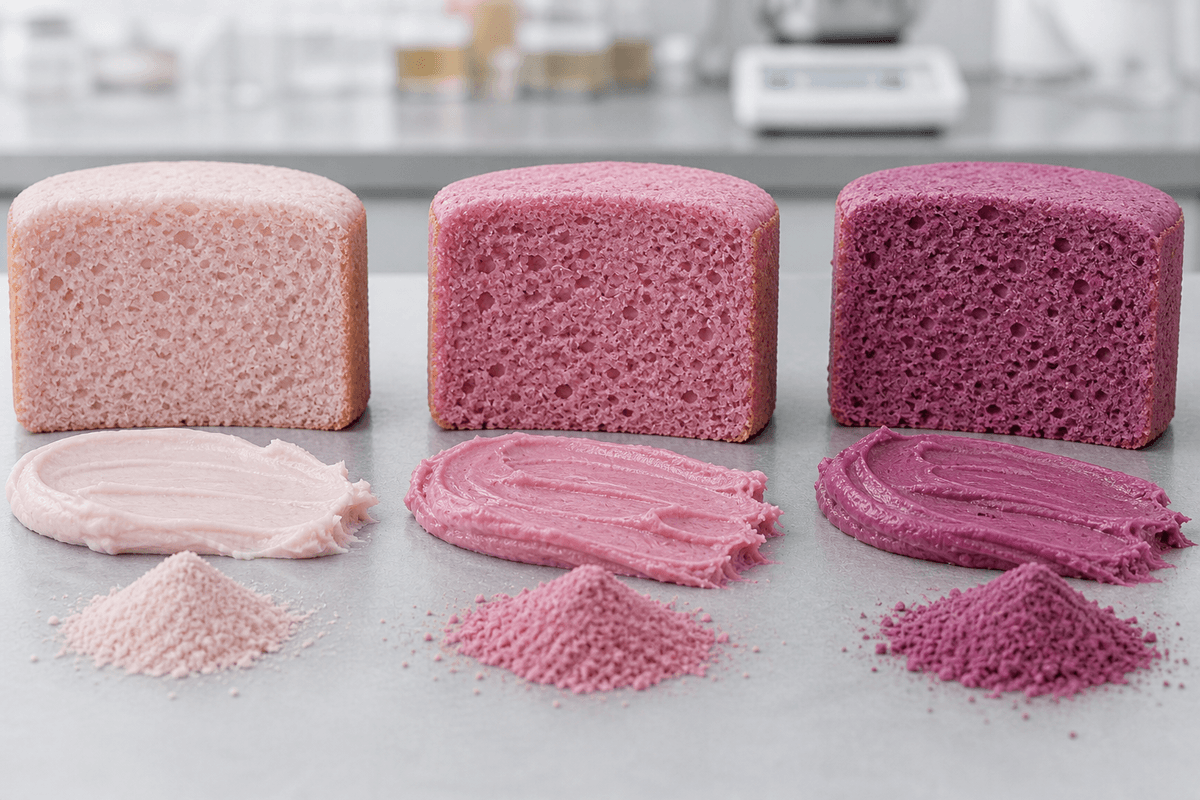
Flour, starch, fat, sugar, cocoa, eggs, proteins, leavening, and pH all influence the apparent color. Evaluate the mixed batter or dough, the hot product, the cooled product, and the stored product. Surface color may differ from crumb color because heat, oxygen, and moisture exposure are not uniform.
- Record the color before and after baking at fixed times and temperatures.
- Check whether powder changes water absorption, viscosity, spread, or rise.
- Inspect speckling caused by coarse particles or incomplete dispersion.
- Compare fruit flavor at the warm and fully cooled stages.
- Monitor fade, browning, and moisture change in the final package.
For frosting, cream fillings, and fat-based coatings, pre-dispersion can matter more than longer mixing. Test dry addition, water-based slurry, and compatible carrier preblend where technically appropriate. The best method is the one that produces uniform color without introducing unacceptable water, clumps, aeration, or flavor change.
Troubleshoot The System, Not Only The Powder
When color is uneven, check addition point, agglomeration, mixing energy, powder wetting, and batch depth before rejecting the ingredient. When the shade changes between laboratory and production, compare heating rate, hold time, equipment surface, oxygen incorporation, shear, and fill temperature. A formula or process difference can look like supplier variation.
When color fades in storage, compare a sealed retained powder, an application control protected from light, and the finished pack. Measure package barrier, headspace oxygen where relevant, and product pH or moisture. This comparison helps locate the loss in ingredient storage, processing, formula interaction, or packaging.
Approve An Application Standard
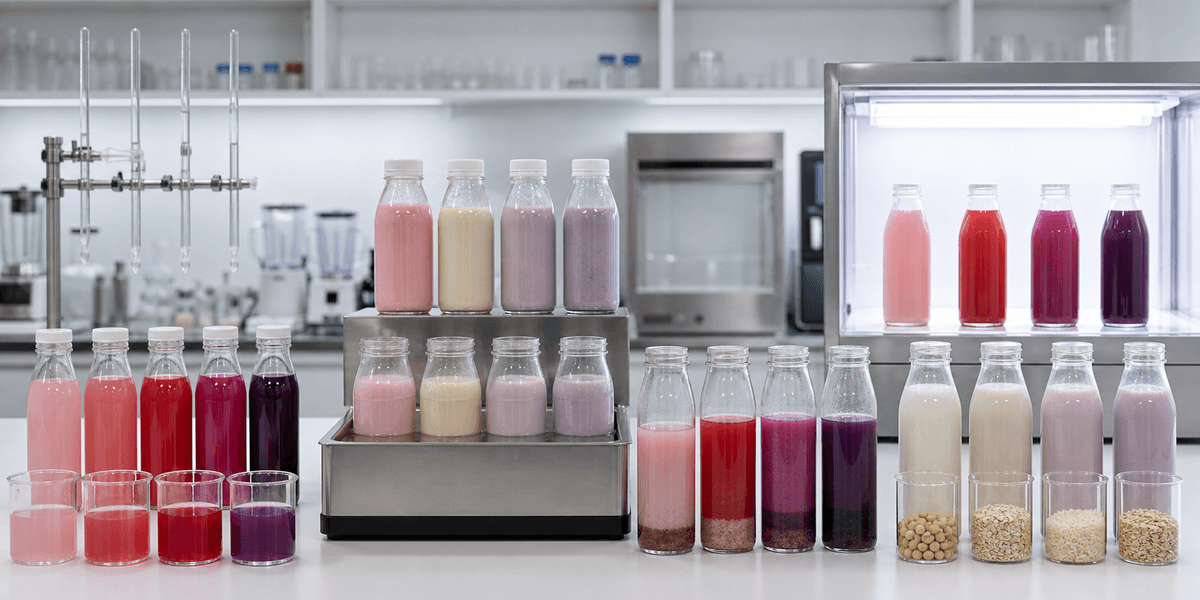
The incoming powder specification should include composition, carrier declaration, color range, moisture or water activity, mesh, bulk density, flowability, sensory profile, microbiological criteria, packaging, and change notification. The finished application should have its own standard at the agreed dose and process, supported by instrument values, controlled photographs, or physical retains.
Huaping Jingnan's berry products and broader freeze-dried fruit selection provide candidates for red, pink, purple, yellow, and orange application trials. Powder format, composition, availability, and documentation should be confirmed for the exact project.
A development brief submitted through the fruit powder inquiry should include the food base, target shade, benchmark, dose range, pH, heat process, package, market, and permitted ingredient statement. Supplying that context is the quickest route to a meaningful sample.