
Freeze dried fruit for yogurt topping gives dairy brands color, fruit identity, and a crisp contrast to creamy yogurt. It also creates one of the clearest moisture challenges in dry ingredient applications. Yogurt is high moisture, while freeze-dried fruit is porous and dry. If the topping is exposed too early, the fruit can soften quickly, bleed color, or lose the crunch that made it attractive in the first place.
For yogurt developers, the main decision is whether the fruit is packed separately, sprinkled at the time of eating, blended into a dry topping mix, or added directly into the yogurt. Each route changes the specification. A separated topping compartment may protect crunch until opening. A blended dry topping may need better particle durability. A direct yogurt inclusion requires a different texture expectation because the fruit will hydrate.
Start With The Eating Moment

Yogurt topping is judged immediately after opening and stirring. Some brands want fruit pieces to stay crisp for several minutes. Others want fruit to soften and release flavor into the yogurt. The supplier and dairy team should define the intended eating moment before choosing fruit size or format. Strawberry, blueberry, raspberry, mango, banana, apple, and mixed berry pieces can each create a different visual and sensory effect.
For yogurt topping concepts, Huaping Jingnan's freeze-dried fruit pieces and freeze-dried berry pieces give dairy teams several visual and texture directions. Strawberry and blueberry pieces can create quick color recognition, mango or pineapple can support a tropical dairy cup, and apple or banana can fit milder breakfast yogurt. The final approval should be based on the actual yogurt system, topping cup, and expected consumer handling.
Moisture Control Is The Core Issue
Freeze-dried fruit is intentionally dry and porous. This structure gives the fruit a light texture, but it also means moisture can change the bite quickly. Yogurt, fruit puree, and dairy headspace can create moisture pickup if the topping is not protected. FDA water activity guidance is useful background because the movement and availability of water affect texture and stability in food systems.
A separated topping cup, pouch, or dome can help protect the fruit until the consumer opens the product. Even then, the packaging material and seal integrity matter. If the dry topping compartment is exposed to moisture during filling or storage, the fruit can lose crispness before use. The dairy team should test fruit texture at production, after cold storage, and after the consumer-style mixing step.
Size, Fines, And Topping Appearance
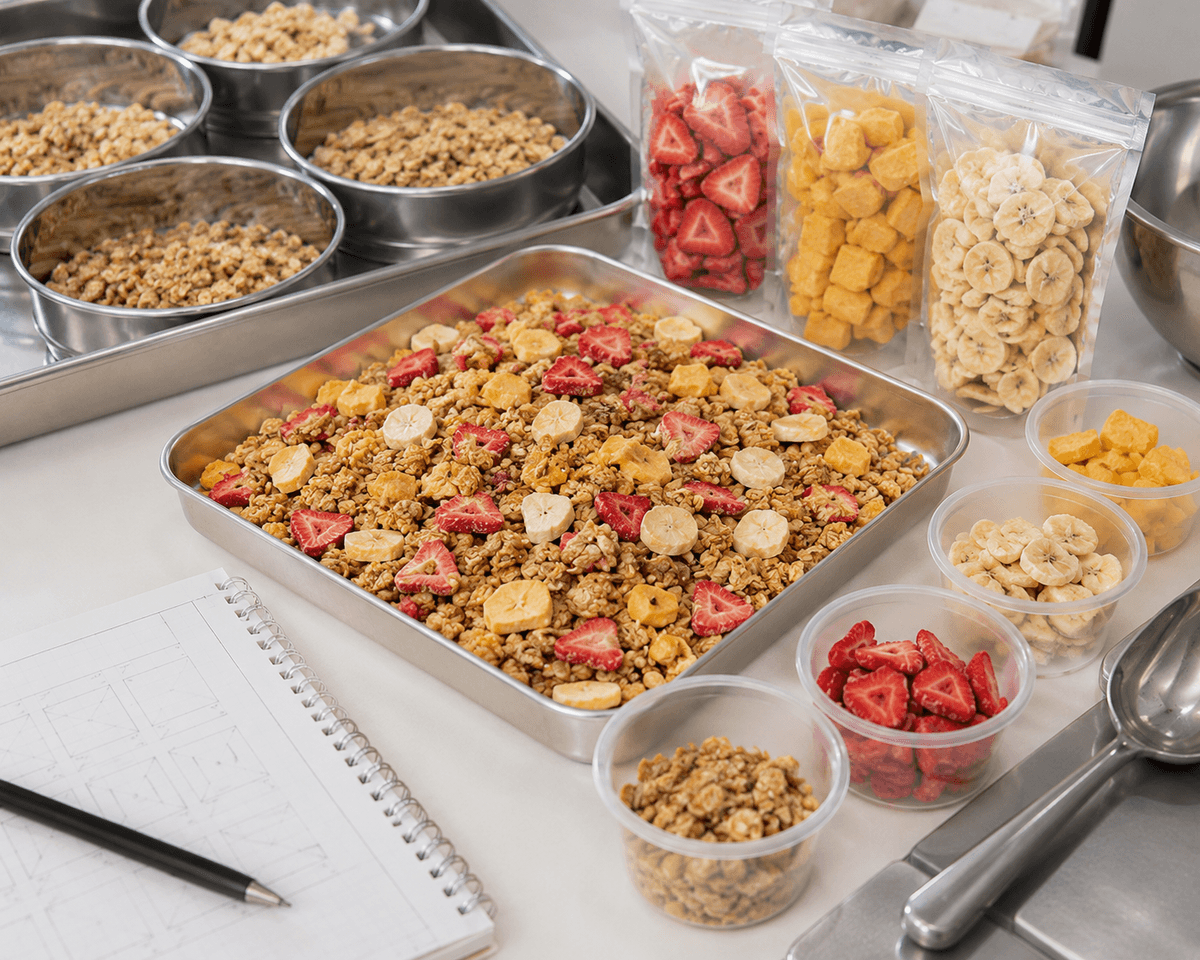
Yogurt toppings are visually sensitive. A bright strawberry piece can signal real fruit, while too much fruit dust can make the topping look messy. Small dices spread evenly but may hydrate quickly and stain the yogurt. Larger pieces look premium but can be fragile or hard to dose evenly. Powders may be useful for swirl, color, or flavor concepts, but they can raise hygroscopicity, caking, dispersibility, and color migration questions.
Buyers should define target piece size, acceptable fines, color defects, broken rate, and any seed or peel tolerance. If the fruit is blended with granola, cereal, nuts, seeds, or chocolate, the finished blend should be tested for segregation. The buyer should inspect the first cup filled, the middle of a run, and the end of a run because light fruit pieces can drift in a hopper.
Food Safety And Document Review
Dairy applications often have strict supplier-document expectations. The freeze-dried fruit document package may include product specification, COA, ingredient statement, nutrition information, allergen statement, microbiological report, foreign-material control information, certificate of origin, pesticide residue or heavy-metal testing where required, and traceability records. The buyer should confirm that the documents match the actual lot delivered.
- Run a yogurt contact test: Check texture and color immediately, after several minutes, and after the intended serving period.
- Test topping packaging: Review seal quality and moisture protection before commercial launch.
- Control fines: Excess powder can color the yogurt and reduce the premium fruit appearance.
- Track bulk density: Light fruit pieces can dose differently from denser topping ingredients.
- Keep retained samples: Store fruit, topping blend, and finished yogurt units for comparison.
Custom Topping Development
Huaping Jingnan's custom fruit-cut, mixed-topping, private-label, and bulk-pack support is useful for yogurt brands that need the topping designed around the cup, dome, or pouch. A good inquiry should include the yogurt type, topping format, target fruit loading, packaging design, expected eating texture, and any document requirements from the dairy plant or retailer.
If the topping is designed for Greek yogurt, a thicker yogurt base may hold fruit differently from a drinkable or spoonable yogurt. If the topping includes crunchy cereal or chocolate, the fruit must survive a more abrasive blend. If the concept is a children's cup, piece size and color visibility may matter more than adult premium cues. These details should guide the supplier sample request.
Approval Path For Yogurt Toppings
The strongest approval path moves from ingredient review to dairy application testing. First, review the freeze-dried fruit sample and supplier documents. Second, test the fruit in the intended topping blend. Third, fill trial topping compartments or pouches. Fourth, store finished yogurt units under the planned conditions. Fifth, perform a consumer-style opening, sprinkling, and stirring test. Sixth, compare retained samples and confirm the final specification.
Freeze dried fruit for yogurt topping works best when crunch, color, aw, size, fines, packaging, and documents are treated together. That approach gives the dairy team a topping that looks good in the cup and behaves predictably after it reaches the consumer.